
NVIDIA Flora: Open-Weight Robot Video Labeling Models
NVIDIA's non-commercial Flora models caption, segment and score robot video; results against GPT-6 Astra are mixed and costs are projections.
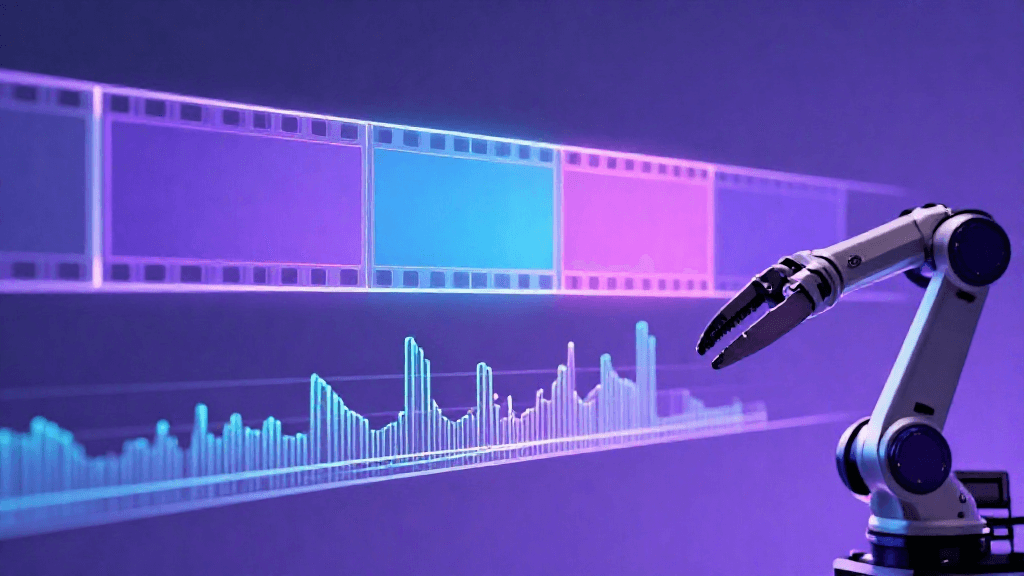
NVIDIA's non-commercial Flora models caption, segment and score robot video; results against GPT-6 Astra are mixed and costs are projections.
Introduction
NVIDIA's GEAR research group has published Flora, which its project page calls "An Open Model Suite for Scaling Robotics Data Engines." The suite consists of three models on Hugging Face, released under the names Flora-TempSeg, Flora-Captioner and Flora-Rewarder. Their job is annotation: cutting robot and human demonstration video into segments, writing timestamped action captions, and scoring how well a task went. According to the model cards, Flora is the data engine used to train GR00T-2, and the Hugging Face release date is listed as 10/15/2026. The Decoder covered it on October 25, 2026.
Two details frame everything below. The weights are released under the NVIDIA OneWay Noncommercial License, so they are open-weight but limited to non-commercial research. And the benchmark picture against GPT-6 Astra is mixed, not a clean win.
Feature Overview
1. Three models, three jobs. According to the model cards, Flora-TempSeg (9 billion parameters, post-trained from Qwen3.5-9B) localizes operations in a video window and flags whether an operation continues past the visible window. The engine then stitches those fragments into episode-level events. Flora-Captioner (27 billion, from Qwen3.5-27B) writes one action instruction for a target interval, using the video before and after it to disambiguate. Flora-Rewarder (27 billion, from Qwen3.5-27B) produces outcome rewards, an episode-level success score used to monitor deployments, and process rewards, dense action-quality scores used in reinforcement-learning post-training.
2. Training recipe. The cards say TempSeg was trained with LoRA (rank 32, alpha 64) and then GRPO reinforcement learning with a verifiable temporal-matching reward. The captioner was fine-tuned and then optimized with GRPO using a reference-grounded caption-quality reward. The rewarder used full fine-tuning of all parameters, including the vision encoder.
3. Scale and cost. The project page says Flora labels 200,000 hours of data per day across 512 GB300 GPUs, and describes the model as roughly 125x cheaper than GPT-6 Astra. The Decoder reports the figures behind that: about 72 cents per hour of video with Flora by NVIDIA's estimate against roughly $88.50 with GPT-6 Astra, and about $42 per hour for Claude Opus 5. It adds that NVIDIA based these on an assumed rental price of $10 per GPU per hour and that they are projections, not production measurements.
4. Human and robot video. The project page says the same annotation pipeline handles human and robot footage, and the abstract points to applications such as physical auto-research and human-to-robot transfer.
The Benchmark Picture
The project page's table compares Flora with GPT-6 Astra, GPT-5.6 Sol, Claude Opus 5 and the open-weight Kimi K3. The abstract says Flora achieves SOTA scores on WGO-Bench, RoboReward and Robometer and is "competitive with GPT-6 Astra" on internal benchmarks while beating other frontier models. Reading the table row by row against GPT-6 Astra gives a more mixed result.
| Benchmark (metric) | Flora | GPT-6 Astra | Better |
|---|---|---|---|
| DenseCaptionBench Human100 (segmentation F1@0.5) | 54.6 | 44.2 | Flora |
| DenseCaptionBench Robot200 (segmentation F1@0.5) | 66.9 | 71.9 | Astra |
| WGO-Bench (gold-window accuracy) | 64.7 | 77.4 | Astra |
| WGO-Bench (joint semantic F1@0.75) | 34.5 | 39.0 | Astra |
| RoboReward (MAE, lower is better) | 40.0 | 55.4 | Flora |
| Robometer OOD (Kendall) | 72.0 | 82.3 | Astra |
| DenseRewardBench (failure recall) | 53.3 | 0.0 | Flora |
| RubricBench (pooled L1 error, lower is better) | 6.5 | 3.6 | Astra |
Counting all 18 metric rows on the page, Flora has the better number in 9, one row is tied (Robometer ID VOC, 98.9 each), and GPT-6 Astra is ahead in 8. Against the other three models in the table, Flora is ahead in every row except Robometer OOD VOC, where Kimi K3 posts 99.7 against Flora's 99.6. The failure-recall row is stark: a recall of 0.0 for GPT-6 Astra means it flagged none of the failures that DenseRewardBench marks. The Decoder adds that GPT-6 Astra also judges the captions while being one of the models under test, a methodological catch it says the researchers acknowledge.
Usability Analysis
The practical user is a robotics research group with large piles of demonstration video. The model cards describe the intended use as annotating robot and human demonstration videos, prototyping data curation, filtering and monitoring pipelines, and producing reward signals for policy evaluation. The captions serve to balance the pretraining data distribution.
Input requirements are specific. TempSeg works on 16-second windows sampled at 4 Hz in its standard profile, or 32-second windows in its long profile, and accepts one camera or three synchronized cameras. The captioner expects labeled BEFORE, TARGET and AFTER blocks within a 64-frame budget. Running a 27 billion-parameter model on 200,000 hours per day is a data-center workload; the page's figures describe 512 GB300 GPUs, not a laptop.
The license is the main constraint. The cards state that Flora is intended for non-commercial robotics research and development only and is not intended or supported for commercial or production use. They also say outputs are annotations and are not meant to directly control robots or to serve as the sole safety monitor for a physical system.
Pros and Cons
On the plus side, the three models cover segmentation, captioning and reward labeling in one release, the weights are ungated on Hugging Face, and the page reports clear gains on several benchmarks, including human-video captioning and RoboReward error. The reported cost gap is large if the projections hold.
On the minus side, commercial use is excluded, the cost numbers are projections built on an assumed GPU price, and GPT-6 Astra leads on the robot-video captioning subset and several reward and caption rows. A robotics company that wants to use Flora in a product pipeline would need a different license from NVIDIA or another labeler.
Outlook
The project page says the life cycle of robotics foundation models depends on data labels: outcome rewards for monitoring deployments, process rewards for RL post-training, and timestamped captions for filtering and balancing pretraining data. Open weights let academic groups label custom datasets on their own hardware instead of paying per-hour API fees, and the abstract names human-to-robot transfer as one application to explore. Independent replication of both the benchmarks and the cost projections would show how much of the page's picture holds outside NVIDIA's setup.
Conclusion
Flora is a substantive release for robotics researchers: three purpose-built annotation models, documented training recipes and benchmark tables that show both wins and losses. It suits academic and non-commercial labs; it does not suit product teams, and it should not be read as a blanket win over GPT-6 Astra.
Editor's Verdict
NVIDIA Flora: Open-Weight Robot Video Labeling Models earns a solid recommendation within the research space.
The strongest case for paying attention: three specialized models cover segmentation, captioning and reward scoring in one release with documented training recipes. That alone raises the bar for what readers should expect in this space. Reinforcing that, ungated weights on Hugging Face let academic labs run the models without negotiating access — practical value rather than just headline appeal. The broader signal worth registering is straightforward: the license limits all three models to non-commercial robotics research, so open weights here do not mean open for product use. On the other side of the ledger, one constraint is real rather than a marketing footnote: a non-commercial license rules out commercial or production use of the models. It should factor into any serious decision. Layered on top of that, cost figures are projections based on an assumed GPU rental price rather than measured production costs — which narrows the set of teams for whom this is an obvious yes.
For academic and non-commercial robotics labs sitting on large volumes of unlabeled demonstration video, this is a serious evaluation candidate, not just a curiosity to bookmark. For everyone else, the safer posture is to monitor coverage and revisit once the use cases that matter to your team are demonstrated in the wild.
Pros
- three specialized models cover segmentation, captioning and reward scoring in one release with documented training recipes
- ungated weights on Hugging Face let academic labs run the models without negotiating access
- reported gains on human-video captioning, RoboReward error and failure recall show where the specialized training helps
- a stated production-scale run of 200,000 hours per day across 512 GB300 GPUs indicates the pipeline is built for large datasets
Cons
- a non-commercial license rules out commercial or production use of the models
- cost figures are projections based on an assumed GPU rental price rather than measured production costs
- the comparison with GPT-6 Astra is mixed, with Astra ahead on robot-video captioning and several reward rows
- a 27B captioner and rewarder need data-center class hardware to match the throughput the page describes
References
Comments0
Key Features
1. Three models on Hugging Face: Flora-TempSeg (9B, from Qwen3.5-9B), Flora-Captioner (27B, from Qwen3.5-27B) and Flora-Rewarder (27B, from Qwen3.5-27B) 2. Temporal segmentation, timestamped action captions, and outcome and process reward scores for robot and human demonstration video 3. Data engine used to train GR00T-2, per the model cards; Hugging Face release date listed as 10/15/2026 4. Project page reports 200,000 hours labeled per day across 512 GB300 GPUs and a cost roughly 125x below GPT-6 Astra 5. Released under the NVIDIA OneWay Noncommercial License for non-commercial robotics research and development only
Key Insights
- the license limits all three models to non-commercial robotics research, so open weights here do not mean open for product use
- a row-by-row read of the benchmark table gives Flora the better number in 9 of 18 rows, a tie in one and GPT-6 Astra the better number in 8
- gains on human-video captioning, RoboReward error and DenseRewardBench failure recall sit beside losses on robot-video captioning, WGO-Bench gold-window accuracy and RubricBench
- the 125x cost claim rests on projections that assume a $10 per GPU-hour rental price, according to The Decoder, not on measured production costs
- a split into segmenter, captioner and rewarder lets each stage be trained and evaluated against its own target, with GRPO rewards tailored to each task
- the judge in the caption benchmark is also one of the tested models, a methodological catch that The Decoder says the researchers acknowledge
- the model cards say outputs are annotations and should not directly control robots or act as the sole safety monitor for a physical system
Was this review helpful?
Share
Related AI Reviews

Block's Dessa Voice Model Learns From Speech Alone
Block says Dessa, a full-duplex speech-to-speech model, trained without text on one GB200 NVL72 rack. No benchmarks, paper or public access yet.
MAI-DxO Review: Microsoft's AI Diagnostic Orchestrator
Microsoft reports MAI-DxO scored 83% on complex NEJM cases vs 22-36% for physicians; TechCrunch says stronger base models drive much of the gain.

Anthropic Employment Report: Junior Tech Hires 27% to 9%
Anthropic's internal study: junior share of technical staff fell 21% to 14% as agent hours reached 6x human hours. Data is company-reported.
Anthropic Tests AI Self-Replication on Cheap IoT Devices
Anthropic's Frontier Red Team says small models may be months from self-replicating on IoT devices, based on its own simplified evaluations.