
MiniMax M3 Review: Open-Weight Model with 1M Context at 5% of Frontier AI Cost
MiniMax M3 launched June 1, 2026 as the first open-weight model combining frontier coding, 1M-token context, and native multimodality at a fraction of proprietary model prices.
MiniMax M3 launched June 1, 2026 as the first open-weight model combining frontier coding, 1M-token context, and native multimodality at a fraction of proprietary model prices.
A New Challenger in the Open-Weight Space
On June 1, 2026, Chinese AI lab MiniMax launched M3, a model the company describes as the first open-weight AI to simultaneously offer frontier-level coding capability, a one-million-token context window, and native multimodal inputs. The announcement landed exactly one week after Anthropic released Claude Opus 4.8, which itself set new benchmarks in agentic performance — but M3's headline is not raw capability. It is cost: at promotional launch pricing, M3 operates at roughly 5% of Claude Opus API rates while matching or exceeding several proprietary models on specific benchmark categories.
The release is significant for the open-source AI ecosystem. While open-weight models have made rapid progress in general language tasks, long-context and multimodal capabilities at the frontier have remained the exclusive domain of proprietary labs. M3 challenges that assumption directly, and its weights will be published on Hugging Face and GitHub within ten days of launch, enabling private deployment and fine-tuning.
Key Technical Features
MiniMax Sparse Attention (MSA) Architecture
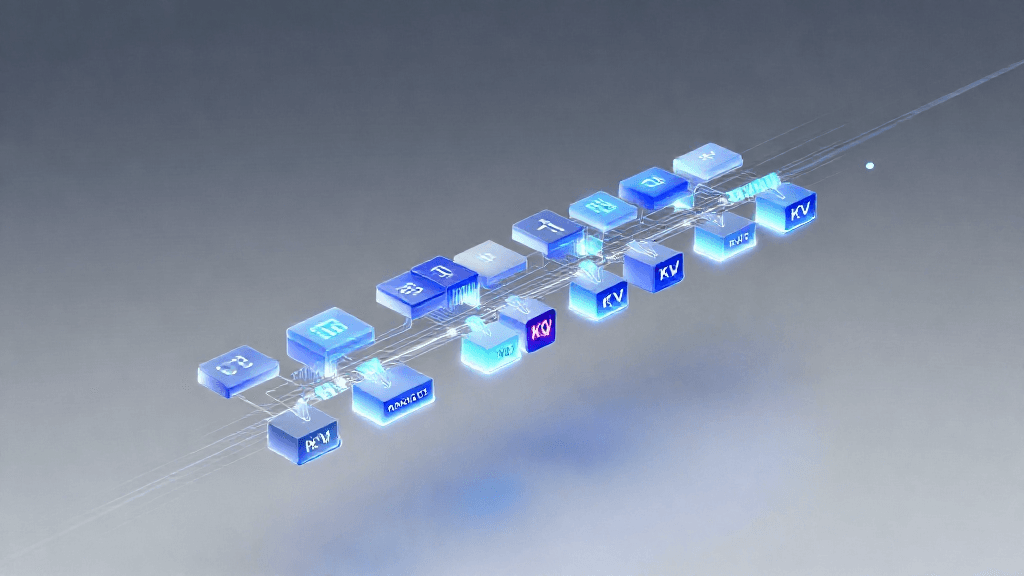
The engineering centerpiece of M3 is a proprietary attention mechanism called MiniMax Sparse Attention. Standard transformer attention scales quadratically with context length — a fundamental bottleneck that makes 1M-token windows computationally ruinous for most architectures. MSA replaces full attention with a KV-block selection mechanism that pre-filters which token blocks are relevant and processes only those.
The result is dramatic: at 1M tokens, M3 delivers approximately 9x faster prefill speeds and 15x faster decoding compared to the prior generation, while consuming roughly one-tenth the per-token compute. In practical terms, this means a realistic 500K input plus 100K output task costs approximately $0.27 at promotional rates — compared to roughly $5.00 for the same task on Claude Opus.
One Million Token Context Window
The 1M-token context window is not a laboratory figure. MiniMax has validated M3's long-context performance through extended autonomy tests: a 12-hour paper reproduction task achieved a 0.650 score, a 24-hour GPU kernel optimization run reached 71.3% hardware utilization, and a four-model training synthesis task with independent iteration was completed end-to-end. These are not synthetic benchmarks — they represent the kind of sustained, long-horizon work that enterprise agentic deployments require.
Native Multimodality
Unlike models that bolt on vision capabilities as a separate component, M3 was trained with interleaved text and image data from the beginning. The model accepts text, image, and video inputs natively, and MiniMax found that mixing modalities from the start of training proved more effective than the alternative of sequential training stages. The practical implication is that multimodal reasoning is better integrated throughout the model's representations rather than treated as a separate pathway.
Benchmark Performance
M3's performance on key evaluations:
| Benchmark | MiniMax M3 | Claude Opus 4.7 | GPT-5.5 |
|---|---|---|---|
| SWE-Bench Pro | 59.0% | ~62% | ~57% |
| Terminal-Bench 2.1 | 66.0% | — | — |
| BrowseComp | 83.5 | 79.3 | — |
| SWE-fficiency | 34.8% | — | — |
MiniMax claims M3 surpasses both GPT-5.5 and Gemini 3.1 Pro on coding tasks and edges past Claude Opus 4.7 on autonomous web browsing (BrowseComp). However, independent reviewers note that the newer Claude Opus 4.8, released a week before M3, trails M3 by approximately 10–13 points on comparable agent evaluations — meaning M3 is competitive with the prior generation of frontier proprietary models but has not leapfrogged the current leading edge.
Pricing and Access
M3 launched on OpenRouter with a temporary 50% promotional discount:
| Period | Input per M tokens | Output per M tokens |
|---|---|---|
| Promotional | $0.30 | $1.20 |
| Standard | $0.60 | $2.40 |
Subscription-style access is available at $20/month (approximately 1.7 billion tokens) through $120/month (approximately 9.8 billion tokens). Requests exceeding 512,000 input tokens incur higher rates, reflecting the additional compute cost of very long context windows.
Model weights are being published on Hugging Face and GitHub within ten days of the June 1 launch, enabling organizations to run M3 on private infrastructure without API dependency.
Usability Analysis
For developers and researchers who need long-context processing — analyzing large codebases, processing lengthy documents, or running multi-hour autonomous agents — M3's combination of capability and cost is genuinely compelling. The MSA architecture's speed advantages at long contexts translate directly to faster agentic loop iteration, which is the primary determinant of how much you can accomplish in a given compute budget.
The native multimodal capability broadens the applicable use cases considerably. Enterprise teams processing technical documentation with embedded diagrams, or research teams analyzing papers with figures, can use M3 without preprocessing to extract text.
The main caveat is that M3 trails the very latest proprietary frontier (Claude Opus 4.8, released May 28, 2026) by a meaningful margin on the most demanding agentic benchmarks. For teams where raw capability is the primary criterion, Opus 4.8 remains the leader. For teams where cost-per-task is a primary constraint — including startups, research groups, and large-scale production systems — M3's 5% cost ratio during the promotional period is a genuinely different proposition.
Pros and Cons
Strengths:
- First open-weight model combining frontier coding, 1M context, and native multimodality in a single model
- 9x faster prefill and 15x faster decoding at 1M tokens versus prior generation via MSA
- Promotional pricing at ~5% of Claude Opus cost makes large-scale deployment economically viable
- Validated long-horizon autonomy (12-hour and 24-hour unassisted task completion)
- Weights will be publicly available, enabling private deployment and fine-tuning
Limitations:
- Trails Claude Opus 4.8 (released one week earlier) by 10–13 points on comparable agent benchmarks
- "Open-weight" does not mean fully open source — the training code and data are not released
- Benchmark claims come primarily from MiniMax itself; third-party verification is incomplete at launch
- Requests exceeding 512K input tokens incur higher rates, complicating cost projection at the extreme end of the context window
Outlook
M3 represents the maturation of a pattern that has defined open-weight AI development since Llama 2: proprietary frontier models lead by six to twelve months, and then capable open-weight alternatives follow at dramatically lower cost. The gap is narrowing. M3's release within days of a major Anthropic update — and its ability to match GPT-5.5 on some key benchmarks while costing 5–10% as much — suggests the open-weight frontier is compressing faster than at any prior point.
For the broader AI ecosystem, the implications are significant. As open-weight models become viable for the same agentic tasks that currently run on proprietary APIs, the leverage that proprietary labs hold over enterprise pricing erodes. MiniMax's MSA architecture, if it generalizes to future model generations, could become a template for affordable long-context processing at scale.
The weights publication timeline (within 10 days) will also be a meaningful test: if M3 proves as capable in private deployment as in hosted API evaluations, it could become a standard baseline for long-context agentic work in the same way llama.cpp established a baseline for local inference.
Conclusion
MiniMax M3 does not dethrone the current frontier, but it does not need to. By matching GPT-5.5 on coding benchmarks and offering 1M-token multimodal processing at a fraction of the cost of proprietary alternatives, it expands what is economically feasible for the teams who cannot justify Claude Opus-level API bills. Researchers, budget-constrained startups, and large-scale production systems processing high token volumes are the natural early adopters. The open weights publication will be the key determinant of long-term impact.
Editor's Verdict
MiniMax M3 Review: Open-Weight Model with 1M Context at 5% of Frontier AI Cost earns a solid recommendation within the other llm space.
The strongest case for paying attention is first open-weight model to combine frontier coding, 1M-token context, and native multimodality simultaneously, which raises the bar for what readers should now expect from peers in this space. Reinforcing that, MSA architecture delivers dramatic speed advantages at long contexts critical for agentic workflows adds practical value rather than just headline appeal. The broader signal worth registering is straightforward: MSA architecture solves the quadratic attention scaling problem that has blocked long-context open-weight models, enabling genuine 1M-token capability at production cost. On the other side of the ledger, trails Claude Opus 4.8 by 10-13 points on the most demanding current agent benchmarks is a real constraint, not a marketing footnote, and it should factor into any serious decision. Layered on top of that, open-weight but not fully open source — training data and code are not released narrows the set of teams for whom this is an obvious yes.
For multi-model deployment teams, cost-conscious operators, and developers willing to evaluate beyond the major labs, this is a serious evaluation candidate, not just a curiosity to bookmark. For everyone else, the safer posture is to monitor coverage and revisit once the use cases that matter to your team are demonstrated in the wild.
Pros
- First open-weight model to combine frontier coding, 1M-token context, and native multimodality simultaneously
- MSA architecture delivers dramatic speed advantages at long contexts critical for agentic workflows
- Pricing at 5-10% of Claude Opus makes large-scale or high-volume deployment economically viable
- Weights publication enables private deployment, removing API dependency and data privacy concerns
- Validated long-horizon autonomy through multi-hour unassisted task completion tests
Cons
- Trails Claude Opus 4.8 by 10-13 points on the most demanding current agent benchmarks
- Open-weight but not fully open source — training data and code are not released
- Benchmark claims primarily from MiniMax at launch; third-party independent verification is limited
- Higher per-token rates kick in above 512K input tokens, complicating cost modeling at extreme context lengths
References
Comments0
Key Features
1. MiniMax Sparse Attention (MSA): 9x faster prefill and 15x faster decoding at 1M tokens vs prior generation, consuming 1/10th per-token compute 2. 1 million token context window validated through 12-hour and 24-hour autonomous task completion runs 3. Native multimodality trained from scratch with interleaved text, image, and video data — not post-hoc additions 4. Promotional pricing at $0.30/$1.20 per million input/output tokens — approximately 5% of Claude Opus API rates 5. Open-weight release: weights to be published on Hugging Face and GitHub within 10 days for private deployment and fine-tuning
Key Insights
- MSA architecture solves the quadratic attention scaling problem that has blocked long-context open-weight models, enabling genuine 1M-token capability at production cost
- At promotional rates, a 500K input + 100K output task costs $0.27 on M3 versus $5.00 on Claude Opus — a 18x cost difference that fundamentally changes deployment economics
- M3 matches GPT-5.5 on SWE-Bench Pro (59% vs ~57%) while costing approximately 5-10% as much, potentially disrupting the enterprise pricing power of proprietary labs
- The model trails Claude Opus 4.8 by 10-13 points on top-tier agent benchmarks, suggesting the proprietary frontier still holds a meaningful but narrowing lead
- Native multimodal training (not fine-tuned addition) may give M3 better cross-modal reasoning than models where vision is a secondary capability
- Open-weight release within 10 days of launch signals MiniMax's ambition to build developer ecosystem adoption, not just API revenue
- The one-week gap between Opus 4.8 (May 28) and M3 (June 1) illustrates how compressed the frontier release cycle has become in mid-2026
Was this review helpful?
Share
Related AI Reviews

Elorian Glimpse: Visual Reasoning Model at $0.60/M Input
Elorian's Glimpse reasons with a visual scratch space and costs $0.60/$3 per million tokens. Benchmarks are the company's own.

Meta Muse Wonder: 1M-Token Agent Model Arrives via API
Meta released Muse Wonder and Wonder Full on Oct 12: a 1M-context multimodal agent model, with Wonder on the Meta API and Full for Muse Code users.

Mistral Large 4 Preview: 1T MoE, Weights Due in October
Mistral Large 4 enters public preview as a ~1T-parameter multimodal MoE with 1M context. Weights are promised for October; scores are vendor-run.

Reflection Beam: 501B Open-Weight MoE, Weights Due Soon
Reflection previews Beam, a 501B MoE with 23B active parameters. Apache 2.0 weights are promised later this month; benchmarks are unverified.