
Microsoft Build 2026: MAI-Thinking-1 and Six In-House AI Models Debut with Zero OpenAI Distillation
At Build 2026 on June 2, Microsoft unveiled seven proprietary MAI models including MAI-Thinking-1 (97% AIME 25) and MAI-Code-1-Flash, all trained from scratch without OpenAI data, signaling a strategic shift toward AI independence.
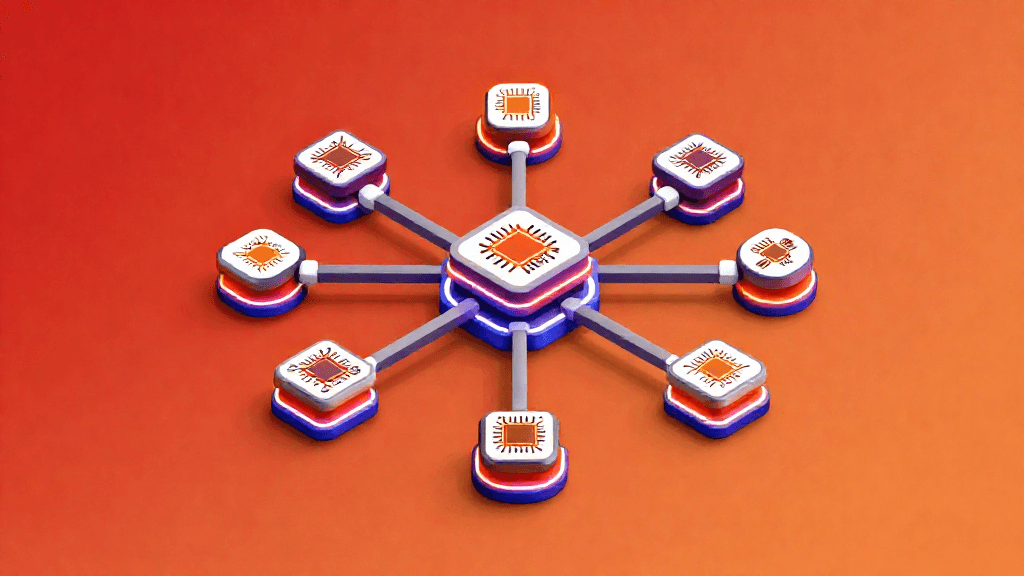
At Build 2026 on June 2, Microsoft unveiled seven proprietary MAI models including MAI-Thinking-1 (97% AIME 25) and MAI-Code-1-Flash, all trained from scratch without OpenAI data, signaling a strategic shift toward AI independence.
Introduction
At Microsoft Build 2026 on June 2, Mustafa Suleyman, CEO of Microsoft AI, unveiled seven new in-house AI models under the MAI brand — and made an explicit point of declaring them trained with "zero distillation" from OpenAI's models. The announcement marks the most significant step yet in Microsoft's drive toward AI model independence after years of deep reliance on OpenAI for the intelligence layer behind Copilot, Azure AI Foundry, and enterprise productivity products. The new models span reasoning, coding, transcription, image generation, and voice synthesis — effectively a full multimodal stack built entirely on Microsoft's own research and compute infrastructure.
Feature Overview
MAI-Thinking-1: Reasoning at 97% AIME 25
MAI-Thinking-1 is Microsoft's first in-house reasoning model, built as a 35-billion active-parameter mixture-of-experts architecture with a 256K context window. On the AIME 25 benchmark it scores 97%, and on SWE-Bench Pro it achieves 52.8% — a result Suleyman described as competitive with Anthropic's Claude Opus 4.6. Human rater evaluations in blind A/B comparisons rated it above Claude Sonnet 4.6 in direct preference. The model uses commercially licensed and clean data lineage, a distinction Microsoft emphasized as a signal of enterprise-grade legal cleanliness alongside raw capability.
MAI-Code-1-Flash: 5B Parameters for GitHub Copilot
MAI-Code-1-Flash is the coding counterpart, a 5-billion parameter model designed for inference-efficient deployment in VS Code and GitHub Copilot. It scores 51% on SWE-Bench Pro — a strong result for a model smaller than Anthropic's Claude Haiku tier. The model is rolling out as a default routing option when users select Auto in the VS Code model picker, meaning it will see immediate real-world deployment at scale across Microsoft's developer tooling. External availability via Foundry, OpenRouter, Fireworks, and Baseten is live from day one.
MAI-Transcribe-1.5: State-of-the-Art Speech Recognition in 43 Languages
MAI-Transcribe-1.5 replaces the earlier MAI-Transcribe-1 with state-of-the-art word error rate (WER) across 43 languages, outperforming OpenAI's GPT-4o-Transcribe and Google's Gemini transcription models on their own published benchmarks. Microsoft claims a 5x speed improvement over competing transcription models. The model integrates directly into Microsoft Copilot, Teams, GitHub, and Dynamics 365 Contact Centre, and is available via Azure AI Foundry for custom deployments.
MAI-Image-2.5: PowerPoint-Ready Image Generation
MAI-Image-2.5 and its Flash variant rank second on the Artificial Analysis image generation leaderboard. The model improves on MAI-Image-2 in three documented categories: text rendering accuracy in generated images, stylized illustration quality, and commercial-grade photorealism. It is already live in PowerPoint and is rolling out to OneDrive. Microsoft described its value proposition as "market-leading quality per dollar" — positioning it as a cost-efficient alternative to Midjourney and DALL-E 3.
MAI-Voice-2: Emotional Control in 15 Languages
MAI-Voice-2 delivers expressive text-to-speech with emotional control, prosody tuning, and native-sounding delivery across 15 languages. A Voice-2-Flash variant optimizes for ultra-low latency voice agents. The model includes on-device watermarking and protections against unauthorized voice cloning, a safety feature Microsoft presented as table-stakes for responsible enterprise deployment of synthetic voice technology.
Maia 200 Co-Design
All seven models were co-designed with Microsoft's Maia 200 custom silicon chip, which Microsoft says delivers a 1.4x performance-per-watt gain over prior generations. The models support direct weight tuning and Reinforcement Learning Environments (RLEs) for building custom agent behaviors — features aimed at enterprise customers who need bespoke fine-tuned models rather than general-purpose API access.
Usability Analysis
For enterprise customers, the "zero distillation" framing is more than a marketing claim: it provides legal clarity that using MAI models does not carry downstream risk from any potential OpenAI IP disputes. This matters particularly in regulated industries where data and model provenance are subject to audit. All seven models are immediately available through Azure AI Foundry, making them accessible through the same procurement, compliance, and security controls that enterprises have already established for Azure workloads.
For developers, the routing of MAI-Code-1-Flash into the VS Code Auto mode means real-world feedback at scale will be available quickly, and the external API access via Foundry and OpenRouter reduces lock-in concerns. The 256K context window on MAI-Thinking-1 is competitive with Claude Opus 4.6 and positions the model well for long-document reasoning tasks common in legal, financial, and research workflows.
Pros and Cons
Pros:
- Seven full-stack models announced simultaneously, covering reasoning, coding, transcription, image, and voice
- 97% on AIME 25 for MAI-Thinking-1 is top-tier benchmark performance at reasoning tasks
- Zero OpenAI distillation provides enterprise legal clarity and supply-chain independence
- Maia 200 co-design enables optimized deployment on Microsoft infrastructure
- Direct enterprise integration into Copilot, Teams, PowerPoint, and Foundry from day one
Cons:
- MAI-Thinking-1's 52.8% SWE-Bench Pro still trails Claude Opus 4.8 (88.6%) and the most capable coding-specialized models
- MAI-Image-2.5 ranks second on leaderboards, not first — Midjourney and competing image models retain advantages in aesthetic quality for creative professionals
- External independent benchmark results were not yet available at launch, making the claimed comparisons to OpenAI and Google models difficult to fully verify
- MAI-Voice-2's 15-language coverage is narrower than ElevenLabs and some Google TTS offerings
Outlook
Microsoft's seven-model launch is the clearest signal yet that the company is treating AI model development as a strategic core competency rather than a capability it can safely outsource. The OpenAI partnership remains important commercially, but Build 2026 demonstrated that Microsoft has been running a parallel internal track that is now mature enough to ship production models across every major AI modality.
The timing is notable: it comes roughly 14 months after Microsoft's original MAI-1 through MAI-3 models were announced, and shortly after Microsoft ended its exclusivity agreement with OpenAI on enterprise Azure deployments. The Maia 200 co-design program — producing a 1.4x performance-per-watt gain — suggests Microsoft is also moving toward vertically integrated AI infrastructure rather than being permanently dependent on NVIDIA for all inference economics.
If MAI-Thinking-1's 97% AIME 25 score holds up in independent evaluation, it would be among the top five publicly available reasoning models globally. That competitive positioning, combined with enterprise-native distribution through Azure, gives Microsoft a credible path to capturing a share of the $15-20 billion enterprise AI model market that currently flows predominantly to Anthropic and OpenAI.
Conclusion
Microsoft Build 2026 represents the maturation of a multi-year effort to reduce external AI dependency while building a commercially competitive model portfolio. MAI-Thinking-1 and MAI-Code-1-Flash are the headline models, but the full seven-model suite signals a strategic commitment that extends well beyond any single benchmark. For enterprise teams evaluating AI model procurement, the combination of competitive performance, Azure-native compliance infrastructure, and clean data lineage makes the MAI suite worth serious evaluation — particularly for organizations with regulatory or IP risk concerns around distilled model lineage.
Editor's Verdict
Microsoft Build 2026: MAI-Thinking-1 and Six In-House AI Models Debut with Zero OpenAI Distillation earns a solid recommendation within the it news space.
The strongest case for paying attention is full multimodal coverage across reasoning, coding, transcription, image generation, and voice synthesis in a single product launch, which raises the bar for what readers should now expect from peers in this space. Reinforcing that, 97% AIME 25 benchmark for MAI-Thinking-1 is top-tier performance for reasoning-focused enterprise tasks adds practical value rather than just headline appeal. The broader signal worth registering is straightforward: the 'zero distillation from OpenAI' declaration is a strategic legal and commercial message: Microsoft is signaling it can replace OpenAI's intelligence layer with its own models across every modality. On the other side of the ledger, MAI-Thinking-1's 52.8% SWE-Bench Pro trails Claude Opus 4.8 at 88.6%, limiting its appeal for the most demanding coding benchmark comparisons is a real constraint, not a marketing footnote, and it should factor into any serious decision. Layered on top of that, independent third-party benchmark verification was not available at launch, making performance claims against OpenAI and Google difficult to confirm narrows the set of teams for whom this is an obvious yes.
For AI industry watchers, strategy teams, and decision-makers tracking platform shifts, this is a serious evaluation candidate, not just a curiosity to bookmark. For everyone else, the safer posture is to monitor coverage and revisit once the use cases that matter to your team are demonstrated in the wild.
Pros
- Full multimodal coverage across reasoning, coding, transcription, image generation, and voice synthesis in a single product launch
- 97% AIME 25 benchmark for MAI-Thinking-1 is top-tier performance for reasoning-focused enterprise tasks
- Zero OpenAI distillation provides clean data provenance for regulated enterprise environments
- Immediate integration into Copilot, Teams, PowerPoint, OneDrive, and GitHub reduces adoption friction for existing Microsoft customers
- External API availability via Foundry, OpenRouter, and Fireworks from day one enables developer ecosystem adoption
Cons
- MAI-Thinking-1's 52.8% SWE-Bench Pro trails Claude Opus 4.8 at 88.6%, limiting its appeal for the most demanding coding benchmark comparisons
- Independent third-party benchmark verification was not available at launch, making performance claims against OpenAI and Google difficult to confirm
- MAI-Image-2.5 ranks second (not first) on image generation leaderboards, leaving a quality gap for creative-professional use cases
- MAI-Voice-2's 15-language coverage is narrower than leading TTS competitors in non-English markets
References
Comments0
Key Features
1. MAI-Thinking-1: 35B active-parameter MoE reasoning model, 97% on AIME 25, 52.8% on SWE-Bench Pro, 256K context window 2. MAI-Code-1-Flash: 5B parameter coding model, 51% SWE-Bench Pro, rolling out as VS Code Auto default 3. MAI-Transcribe-1.5: state-of-the-art WER across 43 languages, 5x faster than competing transcription models 4. MAI-Image-2.5: #2 on Artificial Analysis leaderboard, live in PowerPoint and OneDrive 5. All seven models trained from scratch with zero OpenAI distillation, co-designed with Maia 200 silicon chip
Key Insights
- The 'zero distillation from OpenAI' declaration is a strategic legal and commercial message: Microsoft is signaling it can replace OpenAI's intelligence layer with its own models across every modality
- Routing MAI-Code-1-Flash through VS Code's Auto model picker gives Microsoft immediate production-scale feedback on a 5B parameter model, enabling rapid iterative improvement
- The 97% AIME 25 score for MAI-Thinking-1 places it in the top tier of reasoning models globally, though this must be independently verified before enterprise teams treat it as definitive
- Maia 200 co-design at 1.4x performance-per-watt advantage is a key part of Microsoft's long-term strategy to reduce NVIDIA GPU dependency for inference workloads
- Seven models across five modalities launched simultaneously is an unusually broad release — it signals organizational scale and parallel research investment that only a few labs globally can match
- The RLE (Reinforcement Learning Environments) support for custom agent training is an enterprise differentiator that positions MAI models as a platform, not just an API endpoint
- MAI-Voice-2's built-in voice cloning protection and watermarking reflect growing regulatory pressure on synthetic audio, and position Microsoft ahead of companies that have not yet implemented these safeguards
Was this review helpful?
Share
Related AI Reviews
Meta Pulls Commercial Terms Clause on Scraping, AI Training
Meta removed a Commercial Terms sentence experts read as letting it scrape publisher sites for AI training. Meta says crawlers are unchanged.
Microsoft Maia 300: 96-Accelerator Rack, 2027 Rollout
Microsoft's Maia 300 inference chip claims up to 7x Maia 200's rack throughput on TSMC N2P chiplets, with production rollout starting in 2027.

Nadella: Treat Frontier AI Models as Insider Risks
Nadella's X essay urges treating frontier models as insider risks: controls outside the model, audit evidence and an emergency brake.

Google Pauses OSS VRP Product-Bug Rewards Over AI Slop
Google stopped taking product-vulnerability reports in its OSS bug bounty on Oct 1 over invalid AI submissions; supply-chain rewards continue.