
Ineffable Intelligence: AlphaGo Architect David Silver Raises $1B to Build Superintelligence Beyond LLMs
David Silver, DeepMind co-founder and AlphaGo architect, launches Ineffable Intelligence in London with a reported $1 billion seed round led by Sequoia Capital at a $4 billion valuation, betting reinforcement learning will succeed where LLMs cannot.
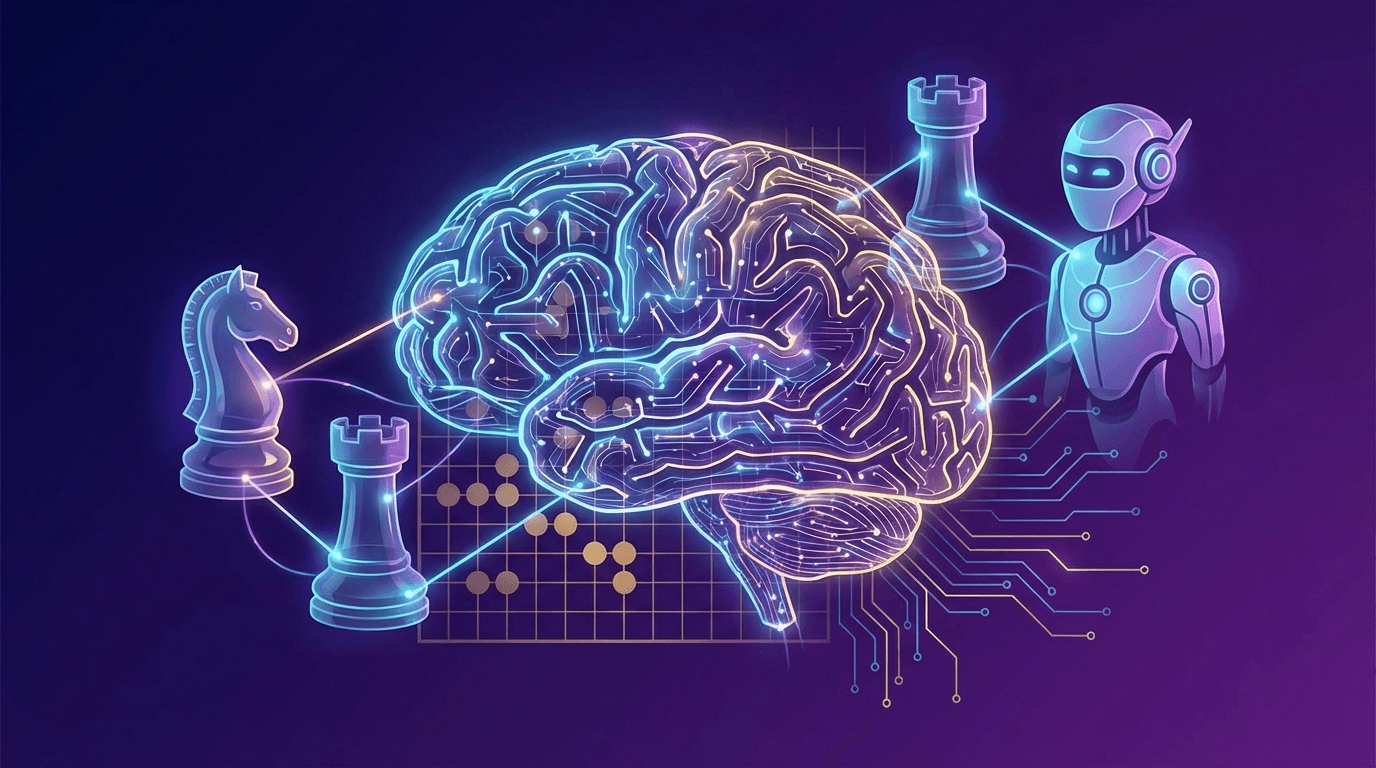
David Silver, DeepMind co-founder and AlphaGo architect, launches Ineffable Intelligence in London with a reported $1 billion seed round led by Sequoia Capital at a $4 billion valuation, betting reinforcement learning will succeed where LLMs cannot.
The Architect of AlphaGo Bets Against LLMs
David Silver, one of the most consequential AI researchers of the past decade, has left Google DeepMind to found Ineffable Intelligence, a London-based startup pursuing superintelligence through reinforcement learning rather than large language models. The company, incorporated in November 2025 with Silver listed as director from January 16, 2026, is reportedly raising $1 billion in seed funding led by Sequoia Capital at a $4 billion valuation. If completed, it would be the largest seed round ever raised by a European startup.
Silver was one of DeepMind's earliest employees when the company was founded in 2010. He led the development of AlphaGo, which defeated world Go champion Lee Sedol in 2016; AlphaZero, which mastered chess and shogi in 2018; and AlphaStar, which achieved competitive-level play in StarCraft II. A Google DeepMind spokesperson confirmed his departure and described his contributions as "invaluable."
The Core Thesis: LLMs Are Fundamentally Limited
Silver's founding thesis directly challenges the prevailing approach of every major AI lab. He argues that large language models are "fundamentally limited because they're built on human knowledge." The reasoning is straightforward: LLMs learn by training on text produced by humans, which means they can only approximate and recombine existing human understanding. They cannot discover genuinely new knowledge or develop capabilities that humans have never articulated.
This is not an obscure academic position. In April 2025, Silver co-authored a paper with Richard Sutton, one of the founders of reinforcement learning, titled to advocate for what they call the "Era of Experience." The paper argues for a paradigm shift away from human-knowledge training toward systems that learn from their own direct experience with the world.
Technical Approach: World Models and Continuous Learning
Ineffable Intelligence's technical direction centers on three pillars drawn from Silver's research career.
First, world models: internal simulations that allow AI agents to predict the consequences of their actions before executing them. Unlike LLMs, which generate text based on statistical patterns, world models create a dynamic representation of how environments behave. An agent with a world model can reason about hypothetical actions and their outcomes, enabling planning in novel situations.
Second, continuous learning: rather than a single training phase followed by static deployment, agents would adapt to their environment over months or years. This is closer to how biological intelligence works. A human does not stop learning after formal education; they continuously update their understanding based on new experiences. Silver's agents would similarly evolve their capabilities through ongoing interaction.
Third, reinforcement learning: the trial-and-error mechanism that powered all of Silver's breakthrough systems at DeepMind. AlphaGo did not learn Go from human games alone. It learned by playing millions of games against itself, discovering strategies that no human had ever conceived. Silver's stated goal for Ineffable Intelligence is building an "endlessly learning superintelligence that self-discovers the foundations of all knowledge."
The Growing Skeptic Coalition
Silver joins a notable group of AI researchers who believe current LLM approaches have fundamental ceilings. Ilya Sutskever, co-founder of OpenAI, left to start Safe Superintelligence Inc., which has raised $2 billion on a similar premise. Jerry Tworek, another former OpenAI researcher, founded Core Automation. These departures from the two leading AI labs suggest that internal disagreements about the path to superintelligence are not merely theoretical.
The contrast with OpenAI and Anthropic is stark. Both companies continue to bet heavily on transformer architecture, scaling laws, and training on human-generated data. They believe that with enough compute, data, and architectural refinement, LLMs can achieve general intelligence. Silver and the growing skeptic coalition believe this is a dead end that will plateau before reaching true superintelligence.
Investor Confidence Without a Product
Ineffable Intelligence does not have a product. It does not have a model. It does not have a demo. The $1 billion seed round, if completed, would be based entirely on Silver's track record and the strength of his thesis. Sequoia Capital is reportedly leading the round, with potential participation from Alphabet, Nvidia, and Microsoft.
The fact that Google's parent company Alphabet may invest is particularly telling. It suggests that Ineffable Intelligence's work is not expected to directly compete with Google's Gemini models or DeepMind's ongoing research. Instead, it may represent a hedge: if the reinforcement learning path to superintelligence proves viable, Alphabet wants exposure to it regardless of where it originates.
This pattern of massive pre-product funding is becoming a trend in AI. Thinking Machines Lab raised $2 billion before shipping a product. Safe Superintelligence Inc. raised $2 billion on Sutskever's reputation. The AI industry's venture capital ecosystem has decided that certain researchers are worth billion-dollar bets based on their scientific credibility alone.
What This Means for the AI Industry
Ineffable Intelligence's launch raises a fundamental question: is the LLM paradigm approaching its ceiling? The evidence is mixed. LLMs continue to improve on benchmarks, and products like Claude, GPT, and Gemini are generating real revenue and delivering genuine value to users. But benchmark improvements are becoming incremental, and the most honest assessments from frontier labs acknowledge that current architectures may not be sufficient for artificial general intelligence.
Silver's approach offers a complementary path. Reinforcement learning and world models could address the areas where LLMs struggle most: genuine reasoning about novel situations, long-horizon planning, and discovering knowledge that does not exist in training data. If Ineffable Intelligence succeeds, it would not necessarily replace LLMs but could provide the missing capabilities needed for systems that truly think rather than pattern-match.
The London location is also significant. Ineffable Intelligence would be the highest-profile AI startup in Europe if its funding round closes at the reported valuation, potentially catalyzing a European AI ecosystem that has struggled to compete with Silicon Valley for talent and capital.
Conclusion
Ineffable Intelligence represents the most credible challenge yet to the assumption that scaling LLMs is the only path to superintelligence. David Silver brings a track record that includes three of the most important AI breakthroughs of the past decade, a clear technical thesis grounded in reinforcement learning and world models, and the backing of Sequoia Capital at a $4 billion valuation. The startup has no product and no timeline, but it has something rarer: a fundamentally different theory of how to reach superintelligence, advocated by someone who has already achieved what most AI researchers only theorize about. Whether reinforcement learning can deliver on the promise of "endlessly learning superintelligence" remains an open question, but David Silver has earned the right to try.
Editor's Verdict
Ineffable Intelligence: AlphaGo Architect David Silver Raises $1B to Build Superintelligence Beyond LLMs stands out as one of the more compelling research developments we've covered recently.
The strongest case for paying attention is founded by one of the most accomplished AI researchers alive, with a track record including AlphaGo, AlphaZero, and AlphaStar, which raises the bar for what readers should now expect from peers in this space. Reinforcing that, offers a fundamentally different path to superintelligence that could address known LLM limitations in reasoning and novel discovery adds practical value rather than just headline appeal. The broader signal worth registering is straightforward: silver argues LLMs are 'fundamentally limited because they're built on human knowledge' and cannot discover genuinely new knowledge. On the other side of the ledger, no product, model, demo, or timeline exists, making the $4 billion valuation entirely based on potential is a real constraint, not a marketing footnote, and it should factor into any serious decision. Layered on top of that, reinforcement learning approaches have historically struggled with real-world environments that lack clear reward signals narrows the set of teams for whom this is an obvious yes.
For ML researchers, technical leads, and readers tracking the underlying science behind new capabilities, the answer here is to pilot now and plan for production use. For everyone else, the safer posture is to monitor coverage and revisit once the use cases that matter to your team are demonstrated in the wild.
Pros
- Founded by one of the most accomplished AI researchers alive, with a track record including AlphaGo, AlphaZero, and AlphaStar
- Offers a fundamentally different path to superintelligence that could address known LLM limitations in reasoning and novel discovery
- Reinforcement learning has already proven capable of superhuman performance in complex domains like Go and chess
- London location could strengthen the European AI ecosystem and attract top research talent to the continent
- Potential backing from Alphabet, Nvidia, and Microsoft provides strategic partnerships beyond pure funding
Cons
- No product, model, demo, or timeline exists, making the $4 billion valuation entirely based on potential
- Reinforcement learning approaches have historically struggled with real-world environments that lack clear reward signals
- The gap between game-playing AI (Go, chess) and general-purpose intelligence remains vast and unproven
- Competing with well-funded labs like DeepMind, OpenAI, and Anthropic for top research talent will be challenging
References
Comments0
Key Features
David Silver, architect of AlphaGo, AlphaZero, and AlphaStar, founds Ineffable Intelligence in London to pursue superintelligence through reinforcement learning. The startup is reportedly raising $1 billion in seed funding led by Sequoia Capital at a $4 billion valuation. Silver's thesis argues LLMs are fundamentally limited because they train on existing human knowledge rather than discovering new knowledge through experience. The technical approach centers on world models, continuous learning, and reinforcement learning. Potential investors include Alphabet, Nvidia, and Microsoft.
Key Insights
- Silver argues LLMs are 'fundamentally limited because they're built on human knowledge' and cannot discover genuinely new knowledge
- The $1B seed round at $4B valuation would be the largest ever for a European startup, entirely pre-product
- Silver's April 2025 paper with Richard Sutton advocates for the 'Era of Experience' paradigm shift away from human-data training
- Alphabet's potential investment suggests the work is seen as complementary to rather than competitive with Google's Gemini models
- Silver joins a growing coalition of skeptics including Ilya Sutskever (Safe Superintelligence) and Jerry Tworek (Core Automation) who left frontier labs
- The technical approach combines world models, continuous learning, and reinforcement learning, the same foundations that powered AlphaGo and AlphaZero
- London headquarters could catalyze the European AI ecosystem if the funding round closes at the reported valuation
Was this review helpful?
Share
Related AI Reviews

Anthropic Tests AI Self-Replication on Cheap IoT Devices
Anthropic's Frontier Red Team says small models may be months from self-replicating on IoT devices, based on its own simplified evaluations.

Harvard Study: AI Coding Agents Shift Bottleneck to Review
Harvard working paper on 718 firms: AI agents raised pull requests 23% and review time 49%, with no significant firm-level output gain.

Goodfire Project Beacon: Probe Monitors for Open Models
Goodfire and Baseten launch Project Beacon, a probe-to-judge cascade for open models, first built for Kimi K3: ~93% recall at 5.5% interruptions.

Ataraxos: Stratego AI Trained for Under $8,000, per Nature
Nature reports Ataraxos won 15 of 20 Stratego games against a four-time world champion, on a training run costing under $8,000 at 2025 prices.