
GPT-5.4 Mini and Nano: OpenAI's Cost-Efficient Models Built for the Subagent Era
OpenAI launches GPT-5.4 mini and nano on March 17, delivering flagship-tier coding performance at a fraction of the cost with 400K context windows.
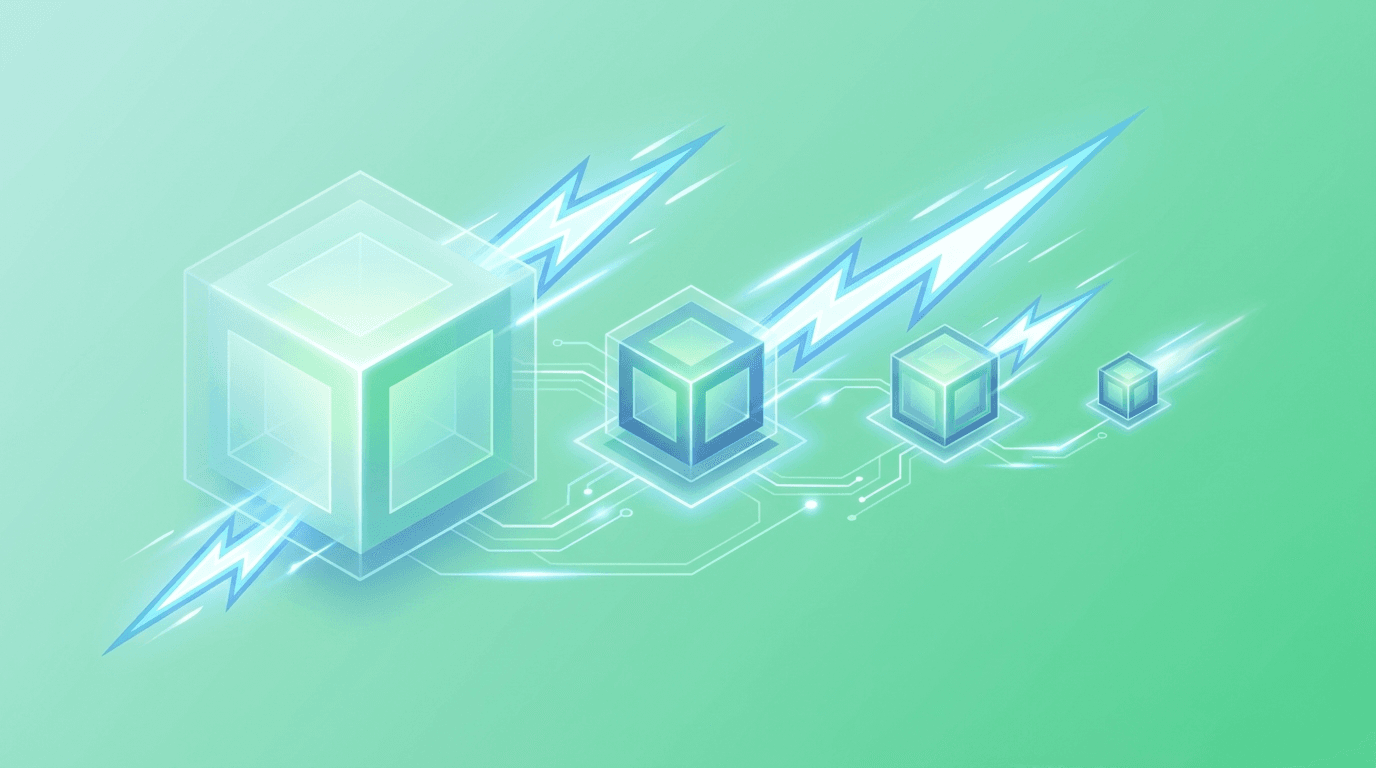
OpenAI launches GPT-5.4 mini and nano on March 17, delivering flagship-tier coding performance at a fraction of the cost with 400K context windows.
Key Takeaways
On March 17, 2026, OpenAI released GPT-5.4 mini and GPT-5.4 nano, its most capable small models to date. These models are purpose-built for a new computing paradigm: the subagent era, where complex AI workflows rely on orchestrating multiple lightweight models rather than routing every request through a single heavyweight model. GPT-5.4 mini approaches the flagship GPT-5.4 on major benchmarks while running more than twice as fast, and nano targets the narrowest, highest-volume tasks where every millisecond and fraction of a cent counts.
GPT-5.4 mini is available immediately in ChatGPT, Codex, and the OpenAI API. GPT-5.4 nano is API-only, positioning it squarely as a developer tool rather than a consumer product.
Feature Overview
1. GPT-5.4 Mini: Near-Flagship Performance at Small-Model Speed
GPT-5.4 mini represents a significant leap over its predecessor, GPT-5 mini, across every measured dimension. On SWE-bench Pro, the standard benchmark for real-world software engineering, mini scores 54.38 percent compared to the flagship GPT-5.4's 57.7 percent, a gap of just 3.3 percentage points. On OSWorld-Verified, which measures computer-use tasks, mini reaches 72.1 percent versus the flagship's 75.0 percent.
The improvements over GPT-5 mini are even more striking. On Toolathlon, a benchmark for multi-tool orchestration, the score jumped from 26.9 percent to 42.9 percent. GPQA Diamond, which tests graduate-level scientific reasoning, climbed from 81.6 percent to 88.0 percent. These gains demonstrate that mini is not just incrementally better but fundamentally more capable at complex reasoning and tool use.
Mini supports a 400,000-token context window, text and image inputs, web search, and function calling. In ChatGPT, it is accessible to Free and Go users via the Thinking feature.
2. GPT-5.4 Nano: The Subagent Workhorse
GPT-5.4 nano is the smallest, cheapest model in the GPT-5.4 family, designed for tasks where speed and cost dominate all other considerations. OpenAI explicitly recommends nano for classification, data extraction, ranking, and coding subagents that handle simpler supporting tasks within larger agentic workflows.
On SWE-bench Pro, nano scores 52.4 percent, which outperforms the previous GPT-5 mini. On Terminal-Bench 2.0, nano reaches 46.3 percent. Its long-context performance at the 128K to 256K range is more limited at 33.1 percent on needle retrieval tasks, indicating that nano is optimized for shorter, focused operations rather than document-scale analysis.
Nano is API-only, confirming OpenAI's strategy of positioning it as infrastructure for developer-built systems rather than a direct consumer product.
3. Pricing: Capable but More Expensive Than Predecessors
The pricing reflects the substantial performance improvements. GPT-5.4 mini costs $0.75 per million input tokens and $4.50 per million output tokens, up from GPT-5 mini's $0.25 input and $2.00 output. GPT-5.4 nano costs $0.20 per million input tokens and $1.25 per million output tokens, up from GPT-5 nano's $0.05 input and $0.40 output.
| Model | Input (per 1M tokens) | Output (per 1M tokens) | Context Window |
|---|---|---|---|
| GPT-5.4 Mini | $0.75 | $4.50 | 400K |
| GPT-5.4 Nano | $0.20 | $1.25 | 400K |
| GPT-5 Mini (previous) | $0.25 | $2.00 | - |
| GPT-5 Nano (previous) | $0.05 | $0.40 | - |
While the price increases are significant, ranging from 3x to 4x, the performance gains are substantial enough that per-task cost may actually decrease for workloads that previously required the flagship model.
4. The Subagent Architecture Vision
The simultaneous release of mini and nano reveals OpenAI's strategic bet on multi-agent architectures. In a subagent system, a powerful orchestrator model delegates specialized subtasks to smaller, faster models. Mini serves as a capable general-purpose agent, while nano handles the high-volume, low-complexity steps like classification and extraction that would be wasteful to run on a larger model.
This approach mirrors the trend across the industry toward compound AI systems, where multiple models collaborate to complete complex workflows. By offering a clear performance-cost spectrum from nano through mini to the flagship, OpenAI provides developers with the building blocks for efficient multi-model architectures.
Usability Analysis
For ChatGPT users, the immediate impact is that Free and Go tier users gain access to GPT-5.4 mini through the Thinking feature, delivering near-flagship reasoning at no additional cost. For paying users, mini serves as a rate limit fallback for GPT-5.4 Thinking, meaning high-demand periods no longer result in degraded quality.
For developers, the 400K context window on both models opens new possibilities for document processing, code analysis, and multi-turn agent conversations. The combination of mini's broad capability and nano's extreme efficiency enables cost-effective architectures that were previously impractical. A developer building a coding assistant, for example, could route complex refactoring tasks to mini while using nano for linting, classification, and simple code completions.
The 2x speed improvement over GPT-5 mini is particularly significant for latency-sensitive applications like real-time coding assistants and interactive agents where response time directly affects user experience.
Pros
- GPT-5.4 mini reaches 54.4% on SWE-bench Pro, within 3 percentage points of the flagship GPT-5.4
- More than 2x faster than GPT-5 mini while delivering substantially better results across all benchmarks
- 400K context window on both models supports large-scale document and code analysis
- Clear performance-cost spectrum from nano to mini to flagship enables efficient multi-agent architectures
- Free ChatGPT users gain access to mini through the Thinking feature
Limitations
- Pricing increased 3x to 4x over GPT-5 mini and nano predecessors, which may strain budgets for high-volume applications
- Nano's long-context performance is limited at 33.1% on 128K-256K needle retrieval, restricting document-scale use cases
- Nano is API-only with no ChatGPT availability, limiting accessibility for non-developers
- OSWorld-Verified gap between mini (72.1%) and flagship (75.0%) is narrow but may matter for production computer-use agents
Outlook
GPT-5.4 mini and nano represent OpenAI's clearest articulation yet of a multi-model future. Rather than building one model to rule all tasks, OpenAI is providing a toolkit where developers select the right model for each subtask based on performance requirements and cost constraints.
The subagent architecture these models enable could become the dominant pattern for production AI systems in 2026. As agent frameworks mature and multi-model orchestration becomes standard practice, the demand for capable but efficient small models will only grow. OpenAI's early positioning with a clear mini-nano hierarchy gives it a structural advantage in this emerging market.
For the broader industry, these launches signal that the frontier of AI competition is shifting from raw benchmark scores to efficiency, cost, and architectural flexibility. The era of the subagent has arrived.
Conclusion
GPT-5.4 mini and nano mark a strategic inflection point for OpenAI. By delivering near-flagship performance at small-model speed and cost, these models make multi-agent AI architectures practical for a wide range of applications. Developers building coding assistants, agentic workflows, and high-volume classification systems should evaluate these models immediately. The higher per-token pricing compared to predecessors is offset by the dramatic capability gains, making them the most compelling small models OpenAI has ever released.
Editor's Verdict
GPT-5.4 Mini and Nano: OpenAI's Cost-Efficient Models Built for the Subagent Era earns a solid recommendation within the gpt space.
The strongest case for paying attention is near-flagship coding performance with mini scoring 54.38% on SWE-bench Pro, which raises the bar for what readers should now expect from peers in this space. Reinforcing that, more than 2x speed improvement over GPT-5 mini across all tasks adds practical value rather than just headline appeal. The broader signal worth registering is straightforward: GPT-5.4 mini closes the gap with flagship models to just 3 percentage points on SWE-bench Pro, making it viable for production coding assistants. On the other side of the ledger, pricing increased 3x to 4x compared to GPT-5 mini and nano predecessors is a real constraint, not a marketing footnote, and it should factor into any serious decision. Layered on top of that, nano's long-context performance is limited at 33.1% on 128K-256K needle retrieval narrows the set of teams for whom this is an obvious yes.
For ChatGPT power users, OpenAI API customers, and enterprise teams already running on the OpenAI stack, this is a serious evaluation candidate, not just a curiosity to bookmark. For everyone else, the safer posture is to monitor coverage and revisit once the use cases that matter to your team are demonstrated in the wild.
Pros
- Near-flagship coding performance with mini scoring 54.38% on SWE-bench Pro
- More than 2x speed improvement over GPT-5 mini across all tasks
- 400K context window on both models supports large-scale analysis
- Clear performance-cost spectrum enables efficient multi-agent architectures
- Free ChatGPT users gain access to mini through the Thinking feature
Cons
- Pricing increased 3x to 4x compared to GPT-5 mini and nano predecessors
- Nano's long-context performance is limited at 33.1% on 128K-256K needle retrieval
- Nano is API-only with no consumer-facing availability
- Higher per-token costs may strain budgets for existing high-volume applications
References
Comments0
Key Features
1. GPT-5.4 mini scores 54.38% on SWE-bench Pro, within 3 points of the flagship GPT-5.4 at 57.7% 2. Both models support 400K token context windows with text and image inputs 3. GPT-5.4 nano priced at $0.20/$1.25 per million tokens (input/output) for high-volume subagent workloads 4. Mini runs more than 2x faster than GPT-5 mini with major gains across coding, reasoning, and tool use 5. Designed for subagent architectures where orchestrator models delegate to specialized smaller models
Key Insights
- GPT-5.4 mini closes the gap with flagship models to just 3 percentage points on SWE-bench Pro, making it viable for production coding assistants
- The 3x to 4x price increase over predecessors reflects a strategic shift from cheap commodity models to capable small models commanding premium pricing
- Nano's API-only availability signals OpenAI views it as developer infrastructure rather than a consumer product
- The mini-nano hierarchy provides a clear blueprint for building cost-efficient multi-agent systems
- 400K context windows on small models democratize large-scale document and code analysis beyond flagship-tier pricing
- Free ChatGPT users receiving mini access through Thinking expands OpenAI's competitive position against Claude and Gemini free tiers
- The subagent era these models target could become the dominant AI application pattern in 2026
- Nano outperforming the previous GPT-5 mini on SWE-bench Pro demonstrates rapid generational improvement in small model capabilities
Was this review helpful?
Share
Related AI Reviews

OpenAI Reportedly Buys Camera AI Startup Glass Imaging
The WSJ reports OpenAI bought computational-imaging startup Glass Imaging for over $300M. OpenAI has not confirmed the deal.

Report Ties RubyGems Attack to OpenAI Agents, Firm Denies
Independent researchers say internal OpenAI agents flooded RubyGems with malicious packages in May 2026; OpenAI disputes the attribution.
OpenAI Agents API Beta: Codex's Harness, Now an API
OpenAI opened its Agents API in public beta, exposing the managed harness behind Codex for sessions, sandboxes, and subagents.
ChatGPT Images 2.5 Review: Sketch, Templates, 50% Faster
OpenAI's ChatGPT Images 2.5 adds Sketch, Templates, and image comments, cuts latency 50%, and doubles API image-token pricing versus gpt-image-2.