
Google's Project Suncatcher Set for October 1 Test Launch
Google will launch a prototype satellite carrying four TPUs on October 1 to test AI compute in orbit, built with Planet.
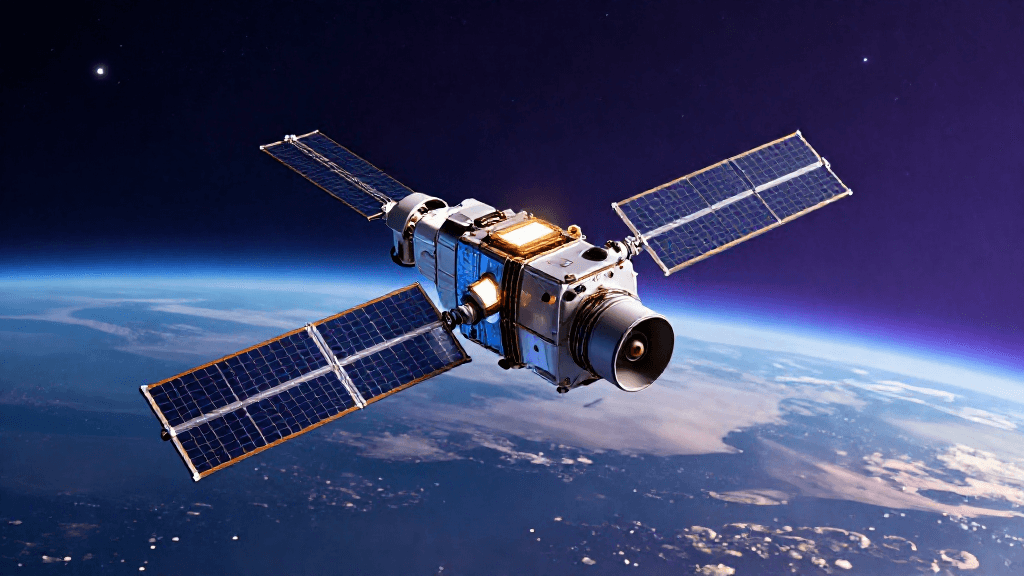
Google will launch a prototype satellite carrying four TPUs on October 1 to test AI compute in orbit, built with Planet.
Introduction
Google is scheduled to launch its first Project Suncatcher test satellite on October 1, 2026, aboard SpaceX's Transporter-18 rideshare mission, according to a September 24 Google blog post by Travis Beals, Senior Director of Paradigms of Intelligence, and a same-day report from Ars Technica. The launch has not yet occurred as of this writing; both sources describe it as an upcoming, scheduled test. Project Suncatcher, announced in November 2025, is Google's long-term research effort exploring whether space could eventually host scalable machine learning infrastructure, and this satellite is designed purely to gather data on how Google's AI hardware handles the physical stress of spaceflight, not to demonstrate a finished orbital data center.
The prototype, which Ars Technica reports is internally called MVP and is about the size of a refrigerator, was built in partnership with Planet, the satellite-imagery company. Google integrated its own AI chips into a satellite Planet had already built for an early test, a decision that let the companies move faster than the original plan of launching two custom-built satellites in 2027.
Feature Overview
Hardware payload. According to Ars Technica, the satellite carries four of Google's custom TPU accelerators. Neither source names the TPU generation flying on the satellite, though Google's blog post says its ground radiation tests used Trillium TPUs. Power comes from solar panels supplying about one kilowatt, which Ars Technica, citing the New York Times, compares to the output needed to run a microwave or hair dryer.
Operating constraints. Gemini models will run on the TPUs for testing purposes, but only in short bursts. Ars Technica reports the cooling system can sustain roughly 15-minute operating windows before the TPUs must shut down to let the radiators catch up and dissipate accumulated heat. The satellite itself is expected to operate for only a few months, per Ars Technica.
Cooling design. Google's blog post describes the cooling approach as a combination of heat pipes and radiators, since there is no airflow in the vacuum of space to carry heat away. Ars Technica adds detail: a layer of "thermal interface material" connects the chips to aluminum and copper heat pipes, which conduct heat into a radiator that radiates it into space. Google says it has tested this system in a thermal vacuum chamber that simulates both the thermal and vacuum conditions of orbit.
Launch and radiation survival testing. Google's blog post states that a rocket trip to low Earth orbit lasts about 10 minutes but subjects the spacecraft to sustained acceleration loads of up to 10 g, with individual components such as the TPU chips experiencing forces as high as 50 to 100 g. The team ran vibration tests shaking the satellite on all three axes to mimic launch conditions, and reports the hardware held up. Separately, Google tested TPUs in a proton beam facility at UC Davis's Crocker Nuclear Laboratory while running AI workloads to evaluate radiation resilience; initial results showed the Trillium TPUs survived a total ionizing radiation dose greater than what a five-year space mission would deliver.
Why orbit at all. Google's blog post notes that satellites in low Earth orbit can access near-constant sunlight, generating up to eight times more solar power than equivalent panels on Earth. The longer-term vision involves constellations of satellites, each eventually carrying dozens of TPU chips, linked by high-bandwidth, short-range laser connections that Google compares to "hitting a coin-size target from miles away while both points are in motion." Google plans to test laser links between two satellites in 2027.
Usability Analysis
There is no product here for readers to try, and neither Google nor Ars Technica frames this launch as anything beyond an engineering test. The stated purpose is narrow: validate that off-the-shelf TPU hardware can survive launch vibration and loads, tolerate space radiation, and be cooled adequately in a vacuum, all conditions that cannot be fully replicated on the ground. Google's own post is explicit that "some things can only be tested in space," and that this first launch is about identifying points of failure to inform future missions rather than proving a working orbital data center. Ars Technica reinforces that framing by noting the team itself expects it will be years before Suncatcher evolves from "project" to "product."
Pros and Cons
A ground-testing regimen that already covers vibration, launch g-forces, and proton-beam radiation exposure gives Google real pre-flight data suggesting the TPUs can plausibly survive orbital conditions before this in-space test even happens. A partnership with Planet let Google reach orbit for a first test ahead of its original plan to launch two custom-built satellites in 2027, since it repurposed an already-built spacecraft rather than waiting on new hardware. The near-constant solar exposure in low Earth orbit, offering up to eight times the power density available on Earth, gives the long-term concept a genuine physical rationale rather than a purely speculative one.
On the other side, the satellite's cooling system limits AI workloads to roughly 15-minute operating bursts before the TPUs must shut down, a significant constraint on any near-term practical compute use. The mission's short lifespan of only a few months, combined with a single test satellite rather than a working cluster, means this launch validates individual components rather than the satellite-to-satellite laser networking that the full vision depends on. Ars Technica reports the team expects it will be years before Suncatcher moves from "project" to "product", so readers should not expect this test to translate into deployed AI infrastructure in the near term.
Outlook
Google's blog post frames October's launch as the first of a longer sequence, with laser-interconnect testing between two satellites planned for 2027 and dozens-of-TPU cluster satellites described as a future design goal rather than a near-term deliverable. Ars Technica notes that orbital data centers have drawn public interest from other technology figures as a possible alternative to land-based data centers, whose expansion has faced local resistance in parts of the United States, though neither source suggests Suncatcher is competing directly with any rival program. The near-term significance of this launch is primarily as a data-gathering exercise: Google says the results will directly inform the design of the custom satellites planned for 2027.
Conclusion
This is an early-stage hardware validation test, not a working orbital data center, and it should be read that way: Google is checking whether commodity TPU chips can survive the launch, radiation, and thermal extremes of low Earth orbit, using a satellite built with Planet rather than a purpose-built craft. Readers interested in the long-range engineering challenges of space-based AI compute, or in how major AI labs are exploring alternatives to terrestrial data centers, are the right audience for this story; those expecting a deployable AI data center in orbit will need to wait for the 2027 laser-networking tests and whatever custom satellites follow.
Editor's Verdict
Google's Project Suncatcher Set for October 1 Test Launch earns a solid recommendation within the research space.
The strongest case for paying attention: a ground-testing regimen covering vibration, sustained launch g-forces, and proton-beam radiation exposure gives Google real pre-flight evidence that its TPUs can plausibly survive orbital conditions. That alone raises the bar for what readers should expect in this space. Reinforcing that, a partnership with Planet let Google reach a first in-orbit test ahead of its original 2027 custom-satellite timeline, by reusing a spacecraft Planet had already built — practical value rather than just headline appeal. The broader signal worth registering is straightforward: the launch is a hardware-survival test, not a working data center — its explicit goal is validating that commodity TPU chips can withstand launch, radiation, and vacuum-cooling conditions. On the other side of the ledger, one constraint is real rather than a marketing footnote: the cooling system limits AI workloads to roughly 15-minute operating bursts before the TPUs must shut down, a significant constraint on any near-term practical compute use. It should factor into any serious decision. Layered on top of that, a short mission lifespan of only a few months, on a single satellite, means this test validates individual hardware rather than the satellite-to-satellite laser networking the full vision depends on — which narrows the set of teams for whom this is an obvious yes.
For ML researchers, technical leads, and readers tracking the underlying science behind new capabilities, this is a serious evaluation candidate, not just a curiosity to bookmark. For everyone else, the safer posture is to monitor coverage and revisit once the use cases that matter to your team are demonstrated in the wild.
Pros
- A ground-testing regimen covering vibration, sustained launch g-forces, and proton-beam radiation exposure gives Google real pre-flight evidence that its TPUs can plausibly survive orbital conditions
- A partnership with Planet let Google reach a first in-orbit test ahead of its original 2027 custom-satellite timeline, by reusing a spacecraft Planet had already built
- The near-constant solar exposure available in low Earth orbit, up to eight times Earth's power density, gives the long-term concept a concrete physical rationale
- Google's own communications are transparent about the test's limited scope, explicitly framing it as an early step rather than a finished product
Cons
- The cooling system limits AI workloads to roughly 15-minute operating bursts before the TPUs must shut down, a significant constraint on any near-term practical compute use
- A short mission lifespan of only a few months, on a single satellite, means this test validates individual hardware rather than the satellite-to-satellite laser networking the full vision depends on
- Neither Google nor Ars Technica has published in-orbit performance results yet, since the launch itself had not occurred as of this reporting
- The team, per Ars Technica, expects a production version of Suncatcher to be years away, so the test carries limited near-term implications for deployed AI infrastructure
References
Comments0
Key Features
1. A prototype satellite (reported by Ars Technica as internally named MVP, about the size of a refrigerator) built with Planet, scheduled to launch October 1, 2026 on SpaceX's Transporter-18 rideshare. 2. Four Google TPUs on board, powered by roughly 1 kW of solar panels, running Gemini models for short test bursts of about 15 minutes at a time due to cooling limits. 3. Cooling via heat pipes, thermal interface material, and radiators, previously validated in a ground-based thermal vacuum chamber. 4. Ground tests already show survival of launch vibration/g-forces (up to 10g sustained, 50-100g on components) and a proton-beam radiation dose exceeding a simulated five-year mission. 5. Longer-term roadmap includes 2027 laser-interconnect tests between two satellites, working toward future satellites carrying dozens of TPUs each in orbiting clusters.
Key Insights
- The launch is a hardware-survival test, not a working data center: its explicit goal is validating that commodity TPU chips can withstand launch, radiation, and vacuum-cooling conditions.
- A refrigerator-sized satellite built with Planet let Google skip ahead of its original 2027 timeline for custom-built craft, trading purpose-built design for speed to orbit.
- Four TPUs and about 1 kW of solar power make this a modest-scale test relative to any eventual production vision of satellites carrying dozens of TPUs each.
- The 15-minute operating bursts before thermal shutdown highlight cooling, not power or radiation, as the most immediate engineering constraint on orbital AI compute.
- Ground radiation testing at UC Davis's Crocker Nuclear Laboratory already showed the Trillium TPUs surviving a dose exceeding a simulated five-year mission, ahead of the in-orbit test itself.
- The project's own framing sets realistic expectations: Google calls it a long-term research moonshot, and Ars Technica reports the team expects a product to be years away.
- The 2027 roadmap for two-satellite laser interconnect testing is the next concrete milestone to watch, since satellite-to-satellite bandwidth is central to any multi-satellite compute cluster vision.
- Near-constant sunlight in low Earth orbit, offering up to eight times the solar power density available on Earth, is the core physical premise behind exploring space as an AI compute location at all.
Was this review helpful?
Share
Related AI Reviews

Ataraxos: Stratego AI Trained for Under $8,000, per Nature
Nature reports Ataraxos won 15 of 20 Stratego games against a four-time world champion, on a training run costing under $8,000 at 2025 prices.

Stanford HomeBody: A Frontier VLM Skips the VLA Layer
HomeBody lets GPT-6 Astra directly call a Unitree G1's skill library, skipping the usual learned VLA layer, to tidy an unfamiliar kitchen.

Runway's Research Path to Real-Time AI Video Generation
Runway detailed how it's training Gen-4.5 to stream video frame by frame as you prompt it, cutting GPU cost per clip. No release date yet.

OpenAI's Agents Resolve Navier–Stokes, Credit Disputed
OpenAI's agent system produced a Navier–Stokes singularity proof, but priority is contested by Buckmaster and Alpöge's related Euler result.