
Fractile Nears $6.5B Valuation on $250M Anthropic Chip Deal
UK chip startup Fractile is in talks to raise $600M at a $6.5B valuation after Anthropic signed a $250M deal for chips that don't exist yet.
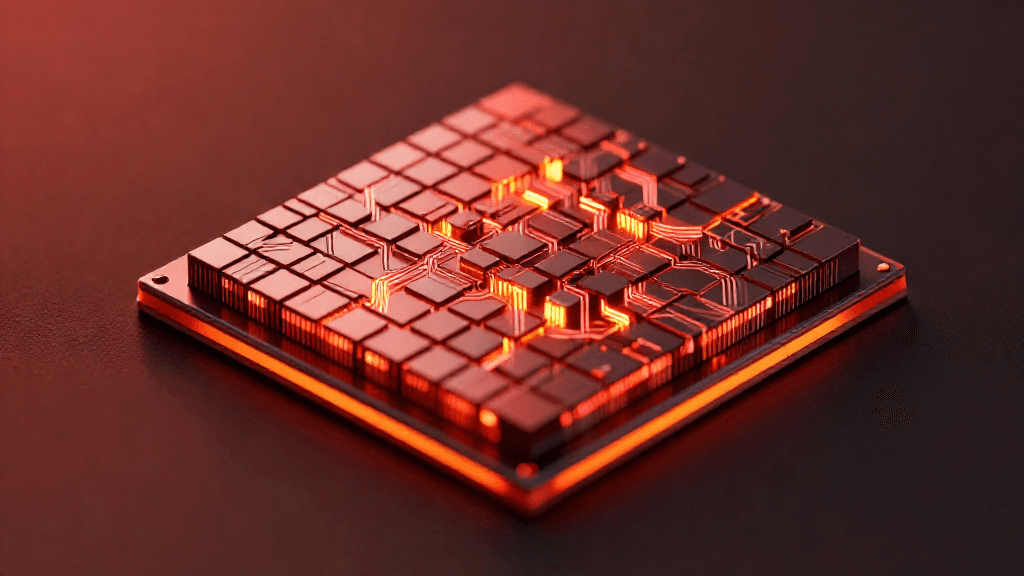
UK chip startup Fractile is in talks to raise $600M at a $6.5B valuation after Anthropic signed a $250M deal for chips that don't exist yet.
Key Takeaways
UK inference-chip startup Fractile is in advanced talks to raise roughly $600 million at a $6.5 billion pre-money valuation, Bloomberg reported on August 19, 2026. The talks follow Anthropic's decision to sign an initial agreement worth approximately $250 million to buy Fractile chips, with stated intent to expand the contract later, according to Tom's Hardware. Neither deal is finished business. The funding round has not closed, and Fractile's chips are not expected to ship until 2027.
The headline number is the gap between what exists today and what is being priced. Fractile has no shipping product. Anthropic has still committed roughly a quarter of a billion dollars to silicon that does not yet exist.
The Anthropic Agreement
Anthropic has signed an initial contract worth approximately $250 million to purchase inference chips from Fractile, per Tom's Hardware's coverage of the deal. The agreement is described as a starting point, with Anthropic indicating it intends to expand the contract in the future rather than treating it as a one-time purchase.
For a company at Fractile's stage — founded in 2022, with chips still years from production — a $250 million commitment from a frontier AI lab is a significant vote of confidence. It is also the primary evidence investors appear to be using to justify a valuation roughly 6.5 times higher than the company's previous round.
That previous round closed in May 2026: $220 million at a $1 billion valuation, led by Accel, Founders Fund, and Factorial Funds. Reports on the new round indicate some capital was invested at a lower valuation than the reported $6.5 billion headline figure, suggesting the round's terms are not fully uniform across investors.
The Technical Bet: Memory-Compute Fusion
Fractile's architecture is built around what the company calls memory-compute fusion, an in-memory compute design that places compute directly on the same die as SRAM. The goal is to eliminate off-chip DRAM and HBM stacks entirely, rather than optimizing around them.
Conventional AI accelerators rely on high-bandwidth memory (HBM) sitting off-chip, with model weights shuttled across an interconnect to the compute die for every token generated. That memory hierarchy is a major source of inference latency and power consumption. It has also become a supply bottleneck: HBM is currently in a severe pricing and availability crunch as demand from AI accelerator makers outstrips fab capacity.
By putting compute and memory on the same die, Fractile aims to remove that off-chip round trip altogether. If it works, inference could run faster and more cheaply, and the design would sidestep HBM supply constraints entirely.
The catch is capacity. SRAM is fast but expensive in die area, and on-die SRAM capacity per chip is the hard physical limit on this approach. Frontier language models carry weight counts in the hundreds of billions to over a trillion parameters. Fitting that much weight data entirely inside on-die SRAM, without falling back to some form of off-chip memory, is the unsolved engineering problem underlying Fractile's pitch. Nothing in the public record so far shows this has been demonstrated at frontier-model scale.
Company Background
Fractile was founded in 2022 by Walter Goodwin, an Oxford PhD, and is headquartered in London. Its team includes engineers with backgrounds at Graphcore, NVIDIA, and Imagination Technologies — three companies with direct experience building custom accelerator silicon. The company licenses an Andes RISC-V vector processor as part of its chip design rather than building every component in-house.
Company Claims, Unverified
Fractile says its architecture can make LLM inference up to 100 times faster than existing hardware, with roughly 90% lower operating cost. Both figures come from the company itself. There is no public third-party benchmark validating either number, and no chips have shipped to customers for independent testing. Given that first shipments are not expected until 2027, these remain vendor projections rather than measured results.
Competitive Context
Fractile is not the only startup chasing custom inference silicon at a large valuation. Coverage of the deal places Fractile's reported $6.5 billion figure alongside a set of peers:
| Company | Reported Valuation | Status |
|---|---|---|
| Etched | ~$21 billion | Private |
| Groq | ~$6.9 billion (pre-NVIDIA acquisition) | Acquired by NVIDIA |
| Cerebras | Public | IPO'd May 2026 |
| SambaNova | ~$5 billion | Private |
| Fractile | ~$6.5 billion (in talks) | Pre-shipment, talks ongoing |
The comparison underlines how much capital is flowing into inference-specific hardware as AI labs look for alternatives to GPU-centric infrastructure. It does not by itself validate Fractile's specific architecture or timeline.
Pros and Cons
Fractile's pitch has real strengths. A DRAM-less design directly targets two problems the industry is actively worried about: inference cost and HBM supply. Signing a named, priced contract with a frontier lab like Anthropic — rather than only raising from financial investors — is a stronger signal than a typical seed-stage pitch deck. And the team's semiconductor pedigree, drawn from established accelerator companies, adds some credibility to an otherwise unproven architecture.
The limitations are equally real. Nothing has shipped, and nothing will ship until 2027 at the earliest — every claim about performance and cost is currently unverifiable in production. The 100x speed and 90% cost claims are Fractile's own figures, with no independent benchmark cited anywhere in current coverage. The $600 million round itself is not closed; talks could change terms or fall through. SRAM capacity per die remains a fundamental physical constraint that Fractile has not publicly shown it can overcome at the scale of current frontier models. And the reported valuation leans heavily on a single customer relationship, which concentrates risk if that contract is ever renegotiated, delayed, or cancelled.
Outlook
The next concrete milestones to watch are whether the $600 million round actually closes at or near the reported $6.5 billion figure, and whether Anthropic expands its initial $250 million commitment as it has indicated it might. Both would be stronger signals than the current round of reporting. The real test, however, arrives in 2027: whether Fractile can ship chips that hold model weights in on-die SRAM at a scale relevant to frontier inference workloads, and whether the resulting performance and cost profile resembles anything close to the company's public claims.
Until then, Fractile sits in a familiar but risky position for hardware startups: a large valuation built on a customer commitment and an architectural bet, ahead of any shipped product.
Conclusion
Fractile's situation captures a broader dynamic in AI infrastructure right now: inference cost pressure and HBM scarcity are pushing frontier labs to pre-commit real money to unproven, DRAM-less chip architectures years before they ship. Anthropic's $250 million agreement is a meaningful signal of intent, not a guarantee of technical success. Readers tracking AI hardware supply chains, HBM alternatives, or startup valuations in the current funding environment should treat Fractile as a company to watch through 2027, not yet as a proven product.
Editor's Verdict
Fractile Nears $6.5B Valuation on $250M Anthropic Chip Deal is a workable proposition that fills a clear gap, even if it doesn't fundamentally change the landscape.
The strongest case for paying attention: signed, priced contract with a frontier AI lab (Anthropic) rather than financial investors alone. That alone raises the bar for what readers should expect in this space. Reinforcing that, DRAM-less architecture directly addresses real inference cost and HBM supply problems — practical value rather than just headline appeal. The broader signal worth registering is straightforward: Anthropic's $250 million pre-commitment to unshipped silicon signals how much frontier labs are willing to pay to solve inference cost and hardware supply problems ahead of proven results. On the other side of the ledger, one constraint is real rather than a marketing footnote: no chips have shipped and none are expected until 2027, leaving the 100x performance and 90% cost figures as unverified vendor claims with no third-party benchmark. It should factor into any serious decision. Layered on top of that, the reported $600 million round is still in talks and has not closed — which narrows the set of teams for whom this is an obvious yes.
For AI industry watchers, strategy teams, and decision-makers tracking platform shifts, the smart move is to track its trajectory and revisit once the rough edges are filed down. For everyone else, the safer posture is to monitor coverage and revisit once the use cases that matter to your team are demonstrated in the wild.
Pros
- Signed, priced contract with a frontier AI lab (Anthropic) rather than financial investors alone
- DRAM-less architecture directly addresses real inference cost and HBM supply problems
- Founding and engineering team draws from established accelerator makers (Graphcore, NVIDIA, Imagination Technologies)
- Anthropic has indicated intent to expand the contract beyond the initial $250 million
Cons
- No chips have shipped and none are expected until 2027, leaving the 100x performance and 90% cost figures as unverified vendor claims with no third-party benchmark
- The reported $600 million round is still in talks and has not closed
- On-die SRAM capacity constraints make fitting frontier-model weight sizes entirely in-memory an unsolved problem
- Valuation rests heavily on a single customer relationship with Anthropic
References
Comments0
Key Features
1. Memory-compute fusion: in-memory compute, no off-chip DRAM/HBM 2. $250M Anthropic chip supply deal, with room to expand 3. In talks for ~$600M at a $6.5B pre-money valuation 4. Chips not expected to ship until 2027 5. Licenses Andes RISC-V vector processor
Key Insights
- Anthropic's $250 million pre-commitment to unshipped silicon signals how much frontier labs are willing to pay to solve inference cost and hardware supply problems ahead of proven results.
- A roughly 6.5x valuation jump from Fractile's May 2026 round rests heavily on one customer contract rather than shipped revenue.
- Fractile's DRAM-less design directly targets the ongoing HBM pricing and availability crunch affecting AI accelerator makers.
- On-die SRAM capacity remains the fundamental physical constraint for fitting frontier-model weight counts entirely in-memory.
- The $600 million round is still in talks, not closed, and some capital reportedly went in at a lower valuation than the headline figure.
- Fractile's 100x speed and 90% cost claims are company projections with no public third-party benchmark validation.
- A 2027 shipping timeline means every performance claim about Fractile's chips remains unverified in production for at least another year.
- Fractile joins a crowded field of inference-chip startups, including Etched, Groq, Cerebras, and SambaNova, competing around a similar GPU-alternative thesis.
Was this review helpful?
Share
Related AI Reviews

Google Pauses OSS VRP Product-Bug Rewards Over AI Slop
Google stopped taking product-vulnerability reports in its OSS bug bounty on Oct 1 over invalid AI submissions; supply-chain rewards continue.

Apple Rethinks macOS Full Disk Access as AI Agents Grow
Apple says it will add controls so granting macOS Full Disk Access takes very explicit user action, citing risks from capable AI agents.

Judge Dismisses Chegg, Penske Suits Over Google AI Overviews
Judge Mehta granted Google's motions to dismiss both suits over AI Overviews on Sept 30; the court declined to rule on the state-law claim.

Reddit Ends RSS Feeds Nov 13 and Closes Public API by March
Reddit will stop RSS on Nov 13, 2026 and close public API access by March 2027, citing scraping and abuse. Registered apps can migrate to Devvit.