
Claude Discovers Novel Enzyme With CRISPR-Like Repeats
Anthropic's biology lab says Claude found a bacteriophage enzyme with CRISPR-like DNA repeats, reviewed by CRISPR pioneer Feng Zhang.
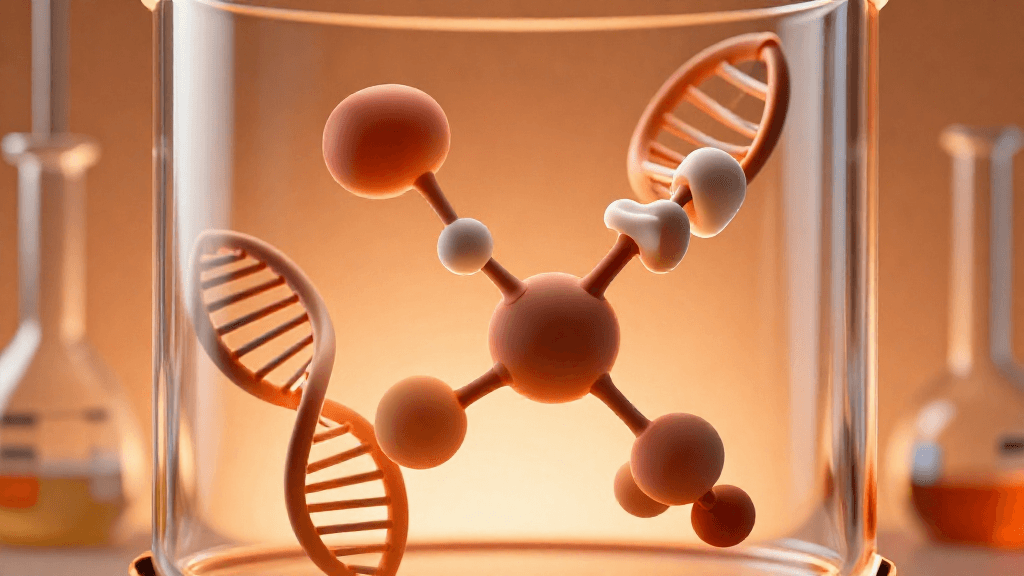
Anthropic's biology lab says Claude found a bacteriophage enzyme with CRISPR-like DNA repeats, reviewed by CRISPR pioneer Feng Zhang.
Introduction
Anthropic on September 23, 2026 introduced a new life sciences research group and laboratory, and used the announcement to share an early result: Claude, working largely on its own, identified a novel enzyme system in bacteriophage DNA that Anthropic itself titled a system with "CRISPR-like repeats." The company calls the finding array-associated reverse transcriptases (ART), and says it emerged from a research program built to test whether general-purpose AI models can accelerate the kind of pattern-spotting that has historically depended on a scientist noticing something unusual in genomic data. Anthropic has published the result as a pre-print rather than a peer-reviewed paper, and it is explicit that ART's actual biological function is still unknown.
Feature Overview
The core of the announcement is process, not product. Anthropic gave Claude agents a single prompt: search a massive database of DNA sequences for interesting, previously uncharacterized reverse transcriptases (RTs) — enzymes that copy RNA into DNA. From there, roughly 950 Claude agents spent 21 hours and 210 million tokens gathering more than 200,000 RT sequences, narrowing them to 3,500 candidate systems, and then to the 20 most compelling candidates worth a full write-up. Each agent produced a short, human-readable report proposing a function for its candidate and the evidence behind it; Anthropic says most candidates are eliminated at this review stage, and a search can end with a single worthwhile lead or none at all.
In this campaign, one agent noticed a repeating pattern of DNA sequences sitting beside the gene for an unusual RT and, according to Anthropic's own published transcript, remarked that it could "see by eye a tandem repeat array... that's a CRISPR-like... repeat array?!" Further computational analysis and wet-lab testing confirmed a previously uncharacterized enzyme system in bacteriophages — viruses that infect bacteria — made up of the RT, a partner gene, and a long, evenly spaced array of DNA repeats. Early lab work shows the array is also expressed as a set of distinct short RNAs, a structural echo of how CRISPR systems use RNA repeats to become programmable. Anthropic says it does not yet know what ART actually does, only that its combination of features has previously been seen together in just a handful of other systems, all of which turned out to be programmable DNA-editing tools.
Feng Zhang, a co-developer of CRISPR gene editing at MIT and the Broad Institute, reviewed Anthropic's pre-print and is quoted calling the identification of RNA-repeat arrays linked to reverse transcriptases "genuinely intriguing" and work that "merits further investigation" — a supportive but measured endorsement, not a confirmation that ART will prove as useful as CRISPR itself. Separately, Anthropic CEO Dario Amodei has acknowledged, per TechCrunch, that Stanford researchers previously identified a system "in some ways similar" to the one Claude found, which tempers how unprecedented the discovery actually is.
Usability Analysis
This isn't a product release, so there's no interface for readers to try. What Anthropic is really showing off is a workflow: Claude reads relevant literature, reproduces established results to check its own methods, searches for family members or genomic neighbors that don't fit any known system, then writes an evidence-based report for each candidate before a further round of Claude-driven critical review whittles the list down. Human scientists step in at two points only — writing the initial prompt and running the physical lab experiments — with Claude helping interpret the resulting data. Anthropic's lab, based in the Bay Area, is restricted to low-risk biosafety levels (BSL-1 and BSL-2) and does not handle pathogens that can infect humans; every hands-on lab step is performed by a human scientist, not an autonomous agent.
Pros and Cons
Anthropic is highlighting genuine efficiency: a search that historically takes an expert scientist weeks or months to run manually was compressed into roughly a day of agent work, and the specific candidate that surfaced held up well enough to warrant real lab testing and outside review from a leading CRISPR researcher. On the other hand, the system's function is still unknown, the finding has not been peer-reviewed, and Amodei's own acknowledgment of prior, similar Stanford work means this reads as a strong demonstration of Claude's research usefulness more than a confirmed scientific breakthrough.
Outlook
Anthropic says its work to understand ART's primary function is ongoing, and the company is explicitly recruiting outside scientists to bring similar AI-assisted genome-mining workflows to other research questions. The announcement also lands alongside Anthropic's broader life-sciences expansion — its roughly $400 million acquisition of Coefficient Bio in April 2026 and its newly launched Life Sciences Verification Program, which gives vetted biology researchers access to Claude Mythos, Opus, and Sonnet with safeguards tuned for lab work. The Verge has noted the timing coincides with Anthropic building a scientific track record as it prepares to go public, which is worth keeping in mind when weighing how much emphasis to place on an early, unreviewed result.
Conclusion
The ART discovery is best read as a case study in AI-assisted genome mining rather than a finished scientific result: a large swarm of Claude agents did the tedious work of screening hundreds of thousands of DNA sequences, one of them noticed something a human curator might also have eventually found, and Anthropic's scientists validated it in the lab well enough to draw interest from a CRISPR pioneer. Readers interested in how agentic AI performs on open-ended scientific search, rather than a confirmed new biotechnology, are the right audience for this one; anyone expecting a CRISPR-caliber tool should wait for the peer-reviewed follow-up.
Editor's Verdict
Claude Discovers Novel Enzyme With CRISPR-Like Repeats earns a solid recommendation within the Claude space.
The strongest case for paying attention: about 950 Claude agents screened more than 200,000 candidate reverse transcriptase sequences in 21 hours using 210 million tokens, narrowing them to 20 top candidates for expert review. That alone raises the bar for what readers should expect in this space. Reinforcing that, human involvement in the discovery phase was limited to an initial prompt, with Claude agents independently surveying literature, drafting evidence reports, and flagging the one candidate that held up to scrutiny — practical value rather than just headline appeal. The broader signal worth registering is straightforward: the headline number is the scale of the computational search, as about 950 Claude agents spent 21 hours and 210 million tokens screening over 200,000 reverse transcriptase sequences down to 20 top candidates, a process Anthropic says would take a human researcher weeks to months. On the other side of the ledger, one constraint is real rather than a marketing footnote: function of the ART system Claude found is still unknown, so it is not yet clear whether the discovery has any practical or medical application. It should factor into any serious decision. Layered on top of that, claimed novelty is undercut by Dario Amodei's own acknowledgment that Stanford researchers previously found a broadly similar system — which narrows the set of teams for whom this is an obvious yes.
For Anthropic and Claude users, alignment-focused teams, and developers already invested in the Claude ecosystem, this is a serious evaluation candidate, not just a curiosity to bookmark. For everyone else, the safer posture is to monitor coverage and revisit once the use cases that matter to your team are demonstrated in the wild.
Pros
- About 950 Claude agents screened more than 200,000 candidate reverse transcriptase sequences in 21 hours using 210 million tokens, narrowing them to 20 top candidates for expert review
- Human involvement in the discovery phase was limited to an initial prompt, with Claude agents independently surveying literature, drafting evidence reports, and flagging the one candidate that held up to scrutiny
- Outside review came from Feng Zhang, a pioneer of CRISPR gene editing at MIT and the Broad Institute, who called the identification of RNA-repeat arrays linked to reverse transcriptases "genuinely intriguing"
- A technical pre-print detailing the methodology was published alongside the announcement rather than only the headline result
Cons
- Function of the ART system Claude found is still unknown, so it is not yet clear whether the discovery has any practical or medical application
- Claimed novelty is undercut by Dario Amodei's own acknowledgment that Stanford researchers previously found a broadly similar system
- Finding has only been shared as a pre-print, meaning it has not yet passed independent peer review
- All physical lab work was performed by human scientists, not Claude, so the announcement demonstrates AI-assisted hypothesis generation rather than autonomous experimentation
References
Comments0
Key Features
1. New life-sciences research lab, formed in spring 2026, focused purely on fundamental biology research using Claude, separate from Anthropic's drug-discovery work. 2. About 950 Claude agents spent 21 hours and 210 million tokens searching a DNA sequence database, narrowing over 200,000 reverse transcriptase candidates down to 20 before writing human-readable reports. 3. One agent identified a repeat pattern next to an unusual RT gene, leading Anthropic to name the new system array-associated reverse transcriptases (ART), found in bacteriophages. 4. ART's DNA-repeat layout resembles a CRISPR array and is expressed as distinct short RNAs in early lab tests, though Anthropic says the system's actual function is still unknown. 5. CRISPR co-developer Feng Zhang reviewed Anthropic's pre-print and called the finding "genuinely intriguing," while CEO Dario Amodei has acknowledged Stanford researchers previously found a broadly similar system.
Key Insights
- The headline number is the scale of the computational search, as about 950 Claude agents spent 21 hours and 210 million tokens screening over 200,000 reverse transcriptase sequences down to 20 top candidates, a process Anthropic says would take a human researcher weeks to months.
- Discovery moment came from an agent noticing a repeat pattern next to an unusual RT gene and, in Anthropic's own published transcript, exclaiming that it looked like "a CRISPR-like... repeat array" before filing a report for human review.
- Novelty claim comes with a caveat Dario Amodei made himself: Stanford researchers had already identified a system "in some ways similar" to the one Claude found, so this is not an unprecedented discovery in isolation.
- Function of the newly named array-associated reverse transcriptase (ART) system remains unknown — Anthropic says it does not yet know what ART does, only that its structure resembles other programmable DNA-editing systems.
- Human role stayed central throughout: Anthropic's scientists wrote the initial search prompt and ran every physical lab experiment in-house, using Claude only to interpret the resulting data.
- External validation from Feng Zhang, one of CRISPR's original developers, lends credibility, but his comment that the finding "merits further investigation" stops short of confirming ART has any practical use.
- Timing lines up with Anthropic's broader life-sciences buildout, including April 2026's roughly $400 million acquisition of Coefficient Bio and the newly launched Life Sciences Verification Program for outside researchers.
- Pre-print status means the finding has not yet been peer-reviewed, so the claims rest on Anthropic's own technical report rather than independent replication.
Was this review helpful?
Share
Related AI Reviews

Anthropic IPO Draft: $4.6B Revenue, $42B Net Loss in 2025
Reports on Anthropic's draft IPO prospectus cite $4.6B 2025 revenue, a $42B net loss, $518B in obligations and existential-risk warnings.

Claude Sonnet 5.5: 30% Faster, Up to 30% Cheaper per Task
Claude Sonnet 5.5 keeps Sonnet 5 pricing, runs 30%+ faster, and cuts per-task cost up to 30%, per Anthropic; Opus 5.5 still leads most benchmarks.
D.C. Circuit Lets Pentagon Exclude Anthropic's Claude, 2-1
A divided D.C. Circuit panel ruled 2-1 that the Department of War can exclude Anthropic's Claude from its supply chain under a 2018 security law.

Anthropic Signs $11.6B, 7-Year Cloud Deal With Akamai
Anthropic committed $11.6B over seven years to Akamai Cloud, with a stock warrant tied to spending and room to expand toward $20B.