
AMD to Acquire Taalas, Betting on Hardwired AI Chips
AMD agreed Aug. 6 to buy Taalas, whose chips hard-code weights into silicon, claiming 17,000 tokens/sec on Llama 3.1 8B at a fraction of GPU power.
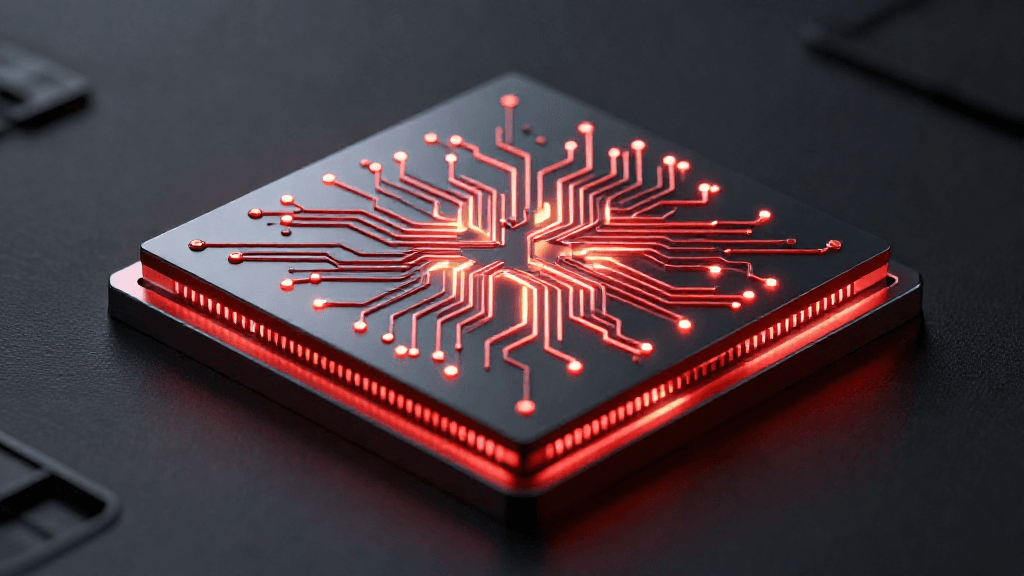
AMD agreed Aug. 6 to buy Taalas, whose chips hard-code weights into silicon, claiming 17,000 tokens/sec on Llama 3.1 8B at a fraction of GPU power.
Introduction
On August 6, 2026, AMD announced a definitive agreement to acquire Taalas, a three-year-old Toronto startup that builds AI inference chips by etching a model's weights directly into transistors instead of storing them in external memory. The deal, confirmed in an official AMD newsroom release, adds a radically different inference architecture to a company that has so far competed with Nvidia primarily on general-purpose GPU silicon. Financial terms were not disclosed, and the transaction is subject to customary closing conditions and regulatory approval.
The acquisition comes roughly six months after Taalas closed a $169 million funding round backed by Quiet Capital, Fidelity, and semiconductor investor Pierre Lamond, bringing its total outside funding to more than $200 million. Rather than continuing as an independent chip vendor pitching model-specific silicon to hyperscalers, Taalas will now be folded into AMD's accelerator roadmap — a significant validation of its approach, but also a bet by AMD that hardwired inference has a real place next to its Instinct GPU line.
Feature Overview
Taalas's core idea is to trade flexibility for raw throughput. Its chips "cast" a model's weights and dataflow directly into transistors — Taalas describes this as hard-coding weights into mask ROM circuits linked to large on-chip SRAM blocks that function as a KV cache — which removes the constant shuttling of weights between compute cores and external high-bandwidth memory (HBM) that limits conventional GPU inference. Because the data never has to leave the die, the chip avoids the memory-bandwidth bottleneck that governs how fast a GPU can generate tokens.
The company's first product, the HC1, is an 815-square-millimeter die built on TSMC's 6-nanometer process with 53 billion transistors, running Meta's Llama 3.1 8B model. Of the more than 100 layers that make up the chip, only two change between different model designs, which is what allows Taalas to claim a roughly two-month turnaround from a model's published weights to a deployable PCIe card. On that architecture, Taalas has claimed around 17,000 output tokens per second — about 73 times the throughput of Nvidia's H200 on the same model — at roughly one-tenth the power draw. A second chip, HC2, is in development for models in the 20-billion-parameter range.
AMD's own announcement frames the acquisition around integration rather than a standalone product line: the company says it will fold Taalas's dataflow-optimization technology into its accelerator roadmap and build system-level solutions that pair it with AMD Instinct GPUs, positioning the combination alongside AMD's existing Helios, Instinct, EPYC, and ROCm stack. AMD SVP of the Artificial Intelligence Group, Vamsi Boppana, described the goal as giving customers "the flexibility to deploy the right compute solutions for every AI workload," while Taalas co-founder and CEO Ljubisa Bajic pointed to the company's Canada-based engineering team as a driver of the deal.
Usability Analysis
For AMD's existing GPU customers, the near-term effect of this deal is limited — Taalas's technology has not yet shipped inside an AMD-branded product, and AMD has not published a timeline for when hardwired inference silicon will reach customers. The practical use case, based on Taalas's own product design, is narrow but potentially valuable: organizations running one specific open-weight model at very large scale, where the cost of committing to fixed silicon is outweighed by dramatically lower inference cost per token. That describes a slice of AMD's hyperscaler and enterprise customer base, not the whole of it, since teams that need to swap between models frequently gain nothing from chips wired to a single checkpoint.
What the acquisition does signal clearly is intent: AMD is willing to look beyond its GPU-centric playbook to compete with Nvidia on inference economics, and it is doing so by buying proven engineering talent — Taalas CEO Ljubisa Bajic previously founded chip startup Tenstorrent — rather than building a hardwired-inference effort from scratch.
Pros & Cons
Pros
- Gives AMD a fundamentally different, potentially far more power- and cost-efficient inference architecture to complement its GPU lineup
- Brings in a founding team with a proven semiconductor design track record from Tenstorrent
- Targets the fastest-growing and most cost-sensitive segment of AI compute spend: high-volume, single-model inference
- Expands AMD's existing engineering presence in Canada
Cons
- Model-specific chips still require new silicon for every new model, an inherent flexibility tradeoff that acquisition doesn't resolve
- Deal terms are undisclosed and the transaction has not yet closed, pending regulatory approval
- AMD has not published an integration timeline or roadmap for when Taalas-derived silicon reaches customers
- Taalas's headline performance figures remain self-reported, without independent third-party benchmarking, even as the technology moves under a major vendor's brand
Outlook
The deal is a concrete sign that chipmakers are looking past general-purpose GPUs for at least part of the AI inference market, where cost per token and power draw increasingly matter more than raw flexibility. If AMD can productize Taalas's approach for inference-heavy but relatively stable workloads — serving a fixed, high-traffic open-weight model, for instance — it gives the company a genuinely differentiated offering rather than a straight GPU-for-GPU fight with Nvidia. The bigger test will be whether AMD can make the model-swap cycle (Taalas's roughly two-month turnaround from weights to silicon) fast enough to stay useful as open models continue to update every few months, and whether independent benchmarks eventually confirm Taalas's performance claims once the technology ships under AMD's name.
Conclusion
AMD's acquisition of Taalas is less about an immediate product than about acquiring a bet: that hardwiring model weights directly into silicon can carve out real efficiency gains for the narrow but growing set of workloads that run one model at massive scale. The underlying technology's tradeoffs — inflexibility, unverified performance claims, and an unclear shipping timeline — remain unresolved by the acquisition itself. For AMD, the more immediate payoff may simply be adding a Tenstorrent-caliber chip design team and a genuinely different architectural idea to its arsenal as it competes with Nvidia on every front of the AI inference market.
Editor's Verdict
AMD to Acquire Taalas, Betting on Hardwired AI Chips earns a solid recommendation within the it news space.
The strongest case for paying attention is gives AMD a fundamentally different, potentially far more power- and cost-efficient inference architecture alongside its GPU lineup, which raises the bar for what readers should now expect from peers in this space. Reinforcing that, brings in a founding team with a proven semiconductor design track record from Tenstorrent adds practical value rather than just headline appeal. The broader signal worth registering is straightforward: AMD announced a definitive agreement to acquire Taalas on August 6, 2026; financial terms were not disclosed. On the other side of the ledger, model-specific chips still require new silicon for every new model, a flexibility tradeoff the acquisition doesn't resolve is a real constraint, not a marketing footnote, and it should factor into any serious decision. Layered on top of that, deal terms are undisclosed and the transaction has not yet closed, pending regulatory approval narrows the set of teams for whom this is an obvious yes.
For AI industry watchers, strategy teams, and decision-makers tracking platform shifts, this is a serious evaluation candidate, not just a curiosity to bookmark. For everyone else, the safer posture is to monitor coverage and revisit once the use cases that matter to your team are demonstrated in the wild.
Pros
- Gives AMD a fundamentally different, potentially far more power- and cost-efficient inference architecture alongside its GPU lineup
- Brings in a founding team with a proven semiconductor design track record from Tenstorrent
- Targets the fast-growing, cost-sensitive segment of high-volume, single-model inference
- Expands AMD's existing engineering presence in Canada
Cons
- Model-specific chips still require new silicon for every new model, a flexibility tradeoff the acquisition doesn't resolve
- Deal terms are undisclosed and the transaction has not yet closed, pending regulatory approval
- AMD has not published an integration timeline or roadmap for when Taalas-derived silicon reaches customers
- Performance figures remain self-reported without independent third-party benchmarking
References
Comments0
Key Features
AMD's acquisition of Taalas brings in chips that hard-code model weights into transistors (mask ROM circuits plus on-chip SRAM as KV cache), eliminating HBM data movement. The HC1 chip (815mm², TSMC 6nm, 53B transistors) claims ~17,000 tokens/sec on Llama 3.1 8B — about 73x Nvidia H200 throughput at one-tenth the power — with only 2 of 100+ chip layers customized per model and a roughly two-month weights-to-silicon turnaround. AMD plans to integrate the technology alongside its Instinct GPUs, Helios, EPYC, and ROCm stack.
Key Insights
- AMD announced a definitive agreement to acquire Taalas on August 6, 2026; financial terms were not disclosed
- Taalas hard-codes model weights into mask ROM circuits linked to on-chip SRAM acting as a KV cache, eliminating HBM data movement
- The HC1 chip is an 815mm² die on TSMC's 6nm process with 53 billion transistors, running Meta's Llama 3.1 8B
- Taalas claims roughly 17,000 output tokens/second on Llama 3.1 8B, about 73x Nvidia H200 throughput at one-tenth the power
- Only 2 of the chip's 100+ layers change between model designs, enabling a roughly two-month turnaround from published weights to a deployable PCIe card
- A second chip, HC2, is in development for models around 20 billion parameters
- AMD plans to integrate Taalas's dataflow technology alongside its Instinct GPUs, Helios, EPYC CPUs, and ROCm software stack
- Taalas previously raised $169 million in February 2026 from Quiet Capital, Fidelity, and Pierre Lamond, for over $200 million in total funding
Was this review helpful?
Share
Related AI Reviews

Judge Dismisses Chegg, Penske Suits Over Google AI Overviews
Judge Mehta granted Google's motions to dismiss both suits over AI Overviews on Sept 30; the court declined to rule on the state-law claim.

Reddit Ends RSS Feeds Nov 13 and Closes Public API by March
Reddit will stop RSS on Nov 13, 2026 and close public API access by March 2027, citing scraping and abuse. Registered apps can migrate to Devvit.
AMD to Acquire Fei-Fei Li's World Labs for $8.2B in Stock
AMD agreed to acquire World Labs for about $8.2 billion in stock; Fei-Fei Li would become AMD's chief scientist. Closing is expected by end of 2026.

Apple Reference Image: How iPhone 18 Pro Proves Photos Real
Apple's new iPhone 18 Pro camera signs sensor data at capture, letting users compare an unalterable reference image to verify a photo wasn't edited.